The stains other cleaners leave behind
Red dye, urine, ink, rust, grease and gum, identified by origin and treated with the chemistry that origin needs — across South Florida commercial and high-end residential properties.
A spot is not a stain
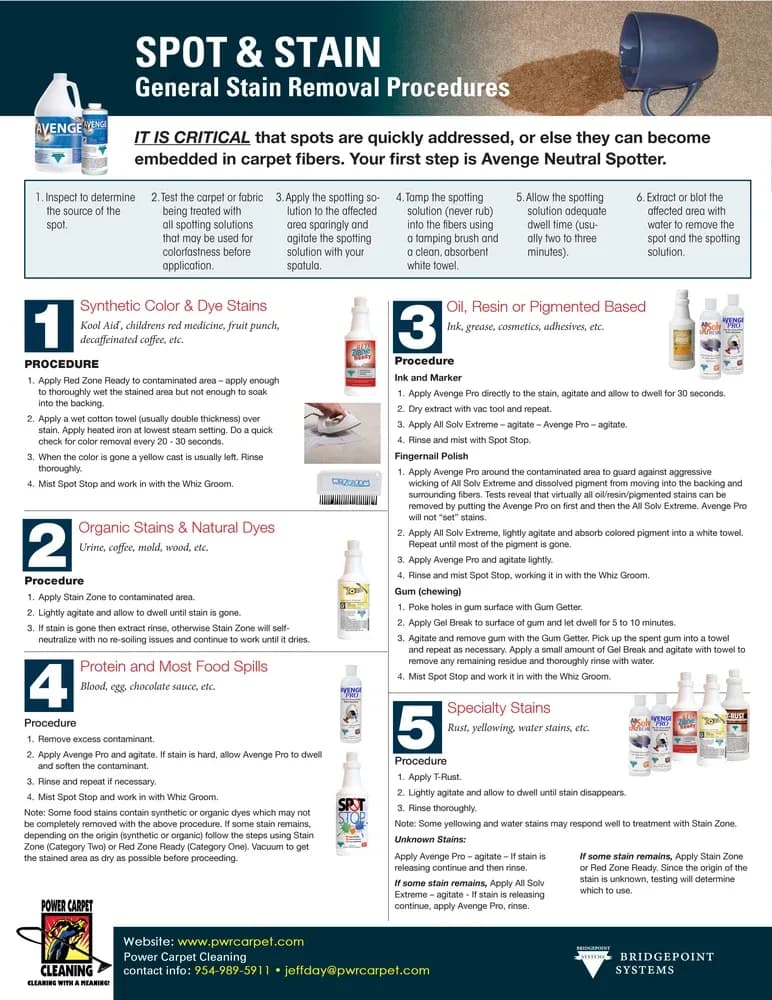
A spot is not a stain. A spot is material sitting on the fibre and it comes out with the right solution; a stain has bonded to the fibre or replaced its dye, and no amount of general-purpose cleaner will lift it. Treating one like the other is what sets a stain permanently.
Every treatment starts the same way: inspect to find what caused it, test the carpet for colourfastness before anything is applied, then apply sparingly and tamp — never rub. The solution gets two to three minutes of dwell time to do the work, and then it is extracted rather than left in the pile.
That is the difference between removing a stain and moving it. It is also why we are called in after someone else has tried.
Five categories, five chemistries.
- 01
Synthetic dyes
Kool-Aid, children’s red medicine, fruit punch, decaffeinated coffee. Treated with a reducing agent and controlled heat transfer, checked every 20 to 30 seconds so the carpet dye is not pulled with the stain.
- 02
Organic stains and natural dyes
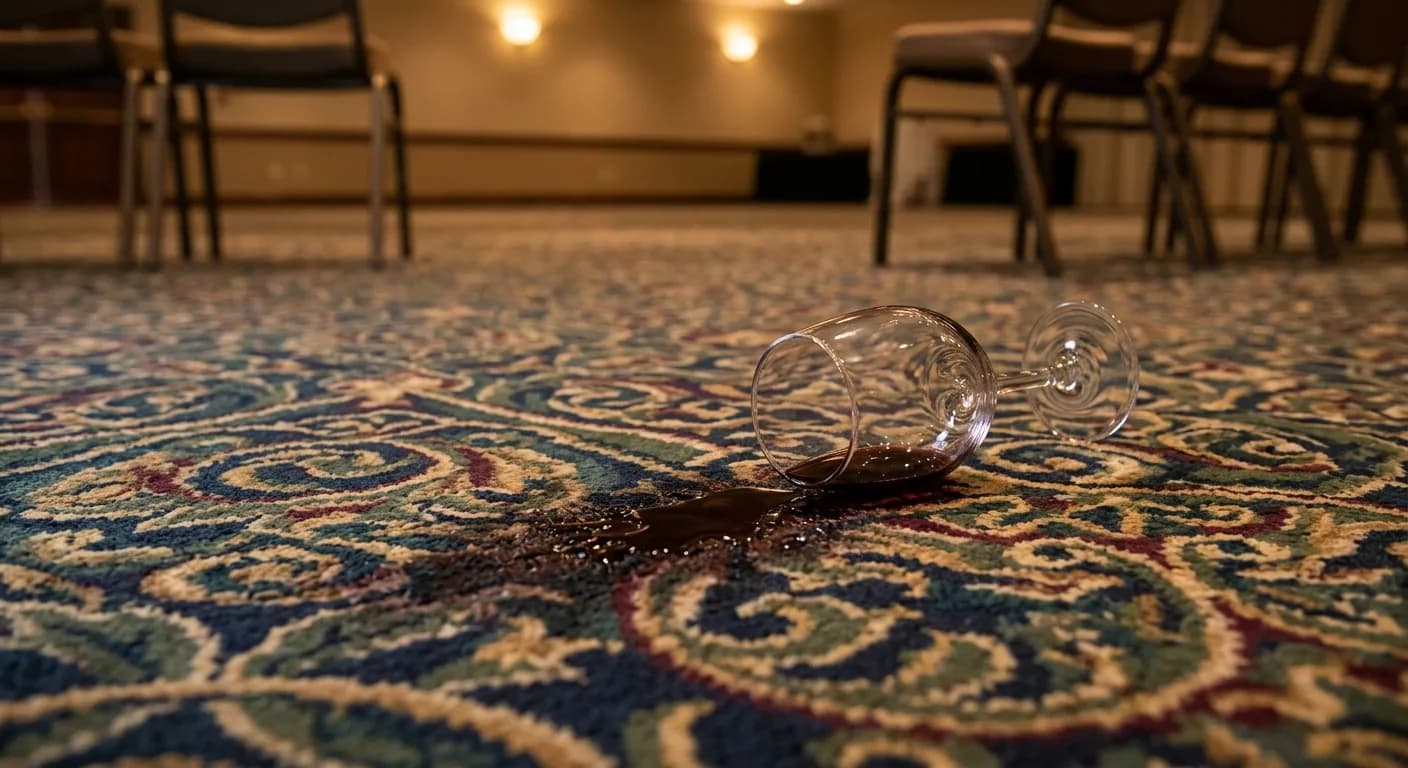
Urine, coffee, mold, wood tannin. An oxidiser is applied and left to work; it self-neutralises rather than leaving a residue that attracts new soil.
- 03
Protein and food
Blood, egg, chocolate. An enzyme-active spotter softens the contaminant first — scrubbing a protein stain sets it into the fibre.
- 04
Oil, resin and pigment
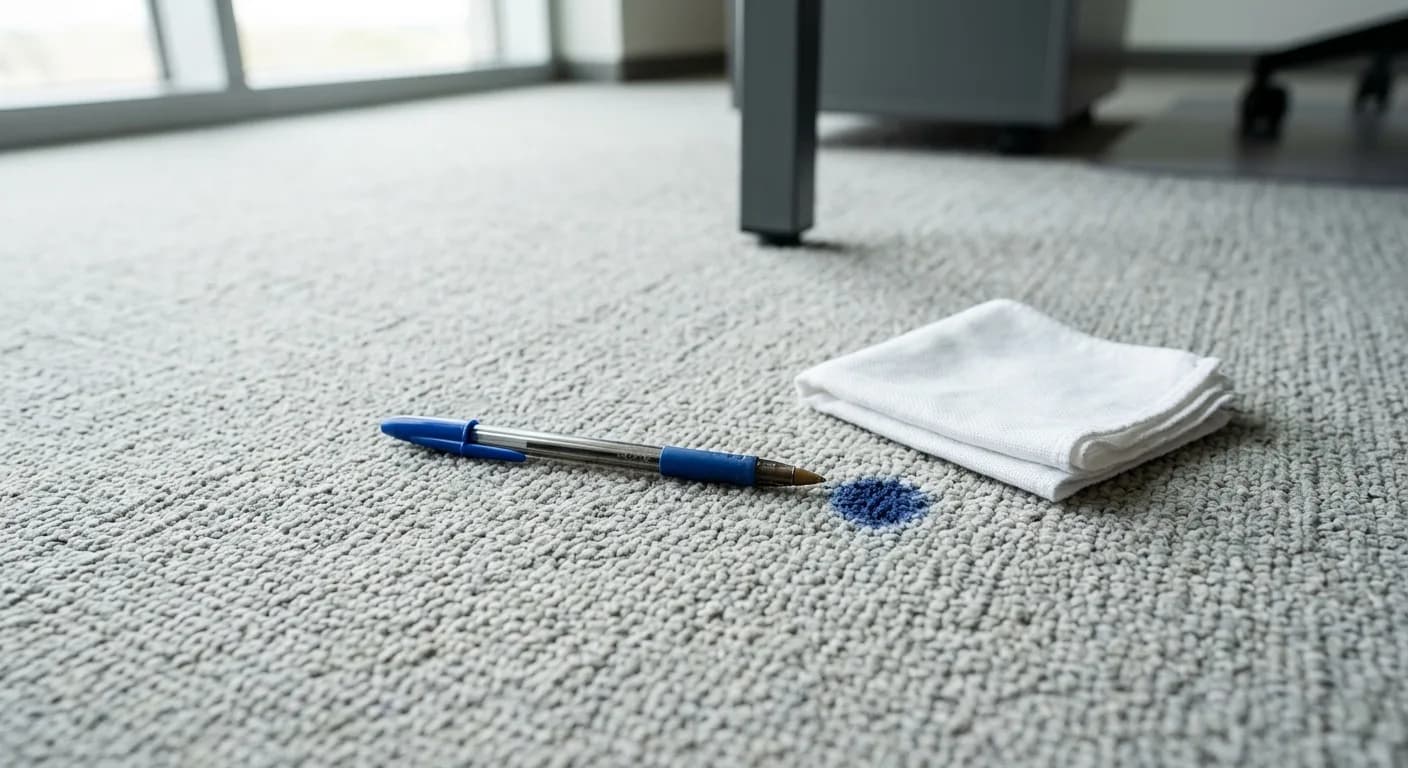
Ink, grease, cosmetics, adhesives, gum, tar. Order matters: the spotter goes on BEFORE the solvent, which stops the dissolved pigment wicking down into the backing and out into clean fibre.
- 05
Specialty stains
Rust, yellowing, water stains. Rust needs an acid; yellowing and water marks often respond to the oxidiser instead. Guessing between them is how a small mark becomes a large one.
When nobody knows what it was
Most of the time nobody knows what caused it. That is not a problem — it just changes the order of work.
Start with the neutral spotter and agitate. If the stain is releasing, keep going and rinse. If it is not, move to the solvent, agitate, and watch again. Still there, and the origin has narrowed itself down: what remains is either a synthetic dye or an organic one, and testing a small area decides which.
That sequence exists so the aggressive chemistry is the last thing tried rather than the first. Reaching for it early is what sets a stain permanently, and it is the single most common way a spot gets made worse before we are called.
The chart we leave with your staff
One page, five categories, the six-step procedure across the top. It is designed to be printed and kept where the spotting kit lives, so whoever finds the spill first does the right thing in the first ten minutes — which is usually what decides whether it comes out at all.
It is the same chart we hand to the facilities teams we train. Download the Spot & Stain Removal chart (PDF, 303 KB).

Some of Our Clients
Tell us what needs cleaning and when you need it done.
Serving Broward, Miami-Dade and Palm Beach counties. We reply to commercial inquiries the same business day, and respond to flood and water emergencies.