
Red Dye, Coffee and Wine: The Three Spots That Ruin Carpet
Red dye is not a stain in the ordinary sense — it is a dye that has found a fibre it likes. Which is why it needs a different product, a different method, and a warning about wool.
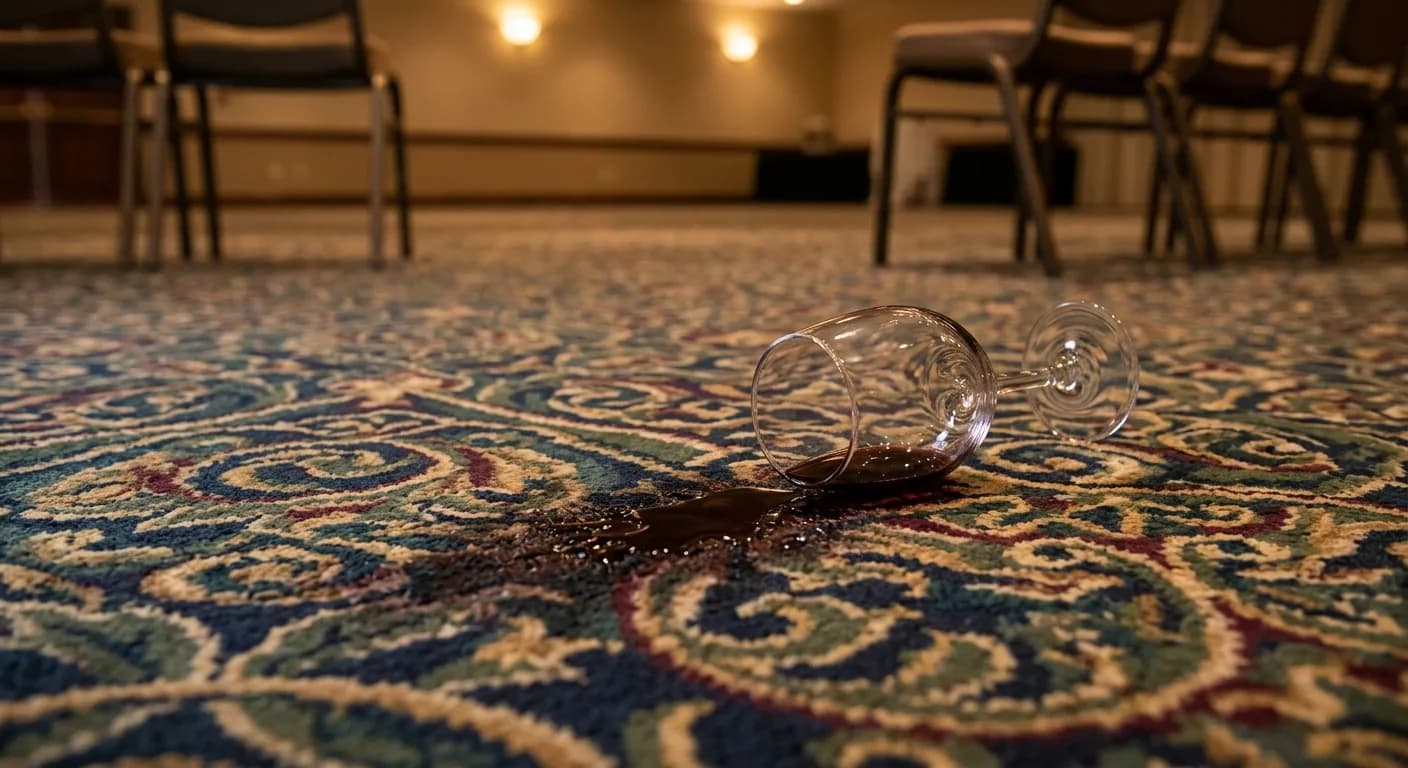
Three marks account for most of the permanent damage on commercial carpet, and they have almost nothing in common except that a general-purpose spotter will not shift any of them: red dye, coffee and wine.
Understanding why they resist is what stops staff making them worse, which is how most of them become permanent.
Red dye is a dyeing accident
Ordinary soil sits on or in the fibre and can be lifted off it. Red dye does not sit anywhere — it bonds. The red colourant in sports drinks, children's fruit drinks, some medicines and a great deal of food is a dye, and carpet fibre is exactly the kind of material dyes are designed to attach to permanently.
So the carpet has been re-dyed, in a small patch, by accident. No amount of washing removes a dye that has taken. The colour has to be chemically broken down instead — which is why the product is a reducer rather than a detergent.
Conventional red stain removers come as two parts to be mixed on site. We use a one-step product, which matters less for chemistry than for reliability: a two-part product mixed wrong under time pressure is a two-part product that does not work.
Heat is part of the method, not an accelerant
Red removal is a chemical reaction, and it needs energy. Heat further accelerates the chemical action, which is why the professional method uses it deliberately — applying the product directly to the carpet and then driving the reaction with heat rather than waiting and hoping.
This is also the step that makes it a job for someone trained. Heat applied carelessly to a synthetic carpet distorts or melts the fibre, and a melted traffic lane is worse than a red one because it cannot be reversed at all.
The warning that matters most
Red reducers are for synthetic carpet and fabrics. Not wool.
Wool holds dye to the core of the fibre — which is why hundred-year-old wool rugs still show brilliant colour, and why a chemical designed to break a dye bond does not distinguish between the spill's dye and the carpet's own. On wool, a red reducer does not remove a stain. It removes the colour.
If there is any doubt about the fibre, that doubt has to be resolved before the product comes out of the bag. This is the single most expensive mistake available in spot removal, and it is made by people trying to help.
Coffee and wine: tannins, and the clock
Coffee and wine behave differently again. Both are tannin stains, both are acidic, and both start out genuinely removable — which is precisely why they end up permanent. They look manageable, so they wait.
The window is the whole game. It is critical that spots are quickly addressed, or else they become deep soils that make a carpet look old and result in premature replacement. A coffee spill dealt with in five minutes is a non-event; the same spill found on Monday morning is a specialist job.
Coffee is common enough in commercial buildings to justify a dedicated product in the kit rather than relying on a general spotter.
The first response, for all three
Before any specialised product, the sequence is the same one that governs every spill:
- Remove as much as possible by blotting — for wine, before it dries, because a dry tannin has bonded further into the fibre.
- Work from the outside in. A red spill spread outward is a much larger reduction job.
- Do not scrub. Distorted pile stays visible after the colour is gone.
- Apply weight or pressure to lift as much liquid as possible into the towel.
Then stop. If the mark is still there after correct first response, it is a stain rather than a spot, and repeated attempts with a general product are what turn a treatable stain into a permanent one.
What to do about it as a building
Two decisions cover most of the risk. Keep a dedicated coffee product and a red reducer in the kit rather than one bottle for everything, and train staff on where their responsibility ends. A logged, untouched red spill is a job we can usually still fix. A red spill that has been scrubbed with the wrong product often is not.
The stains past first response are what our specialty stain removal work is for, and we will train your staff on the boundary — see consultation and training.
Need this handled in your building?
Serving Broward, Miami-Dade and Palm Beach counties.