Carpet Cleaning Services
One Plan Across Different Floor Surfaces
Most buildings have four or five floor surfaces and four or five arrangements for looking after them. Coordinating the plan is worth more than optimising any one of them.
Read more →Power Carpet Cleaning provides commercial floor maintenance in South Florida for property managers, facility teams, offices, hotels, condos, retail locations, and public buildings across South Florida. The service is designed for properties that need a cleaner, better-looking space without guesswork or unnecessary disruption.
Every job starts with the condition of the surface, the amount of foot traffic, the stains or buildup present, and the schedule the property needs to keep. From there, we match the cleaning method to the space.
Need commercial floor maintenance in South Florida?Request a quote from Power Carpet Cleaning.

Commercial floor maintenance can combine carpet and specialty floor care in one practical plan.
Power Carpet Cleaning serves both commercial clients and homeowners. For businesses, that may mean service after hours, phased cleaning, common-area maintenance, or recurring floor care. For homes, it may mean focused stain treatment, rug cleaning, upholstery cleaning, or help before guests, move-ins, and move-outs.
Service is available across Broward, Miami-Dade, and Palm Beach County, including Fort Lauderdale, Miami, Hollywood, Pembroke Pines, Boca Raton, West Palm Beach, Delray Beach, and surrounding communities.
Yes. Larger buildings can be planned in phases so the work fits around daily operations.
Yes. Many clients combine services so carpets, upholstery, and other surfaces are addressed in one visit or planned maintenance schedule.
Power Carpet Cleaning can review the surface condition, use of the space, and drying requirements before recommending a method.
Ready to plan the service?Contact Power Carpet Cleaning.
Floor maintenance has three levels, and they do different jobs. Most buildings buy one of them and wonder why the floors decline.
Skip the first and the other two arrive too late to help. Skip the second and the third is asked to recover a floor that has been declining for a year.
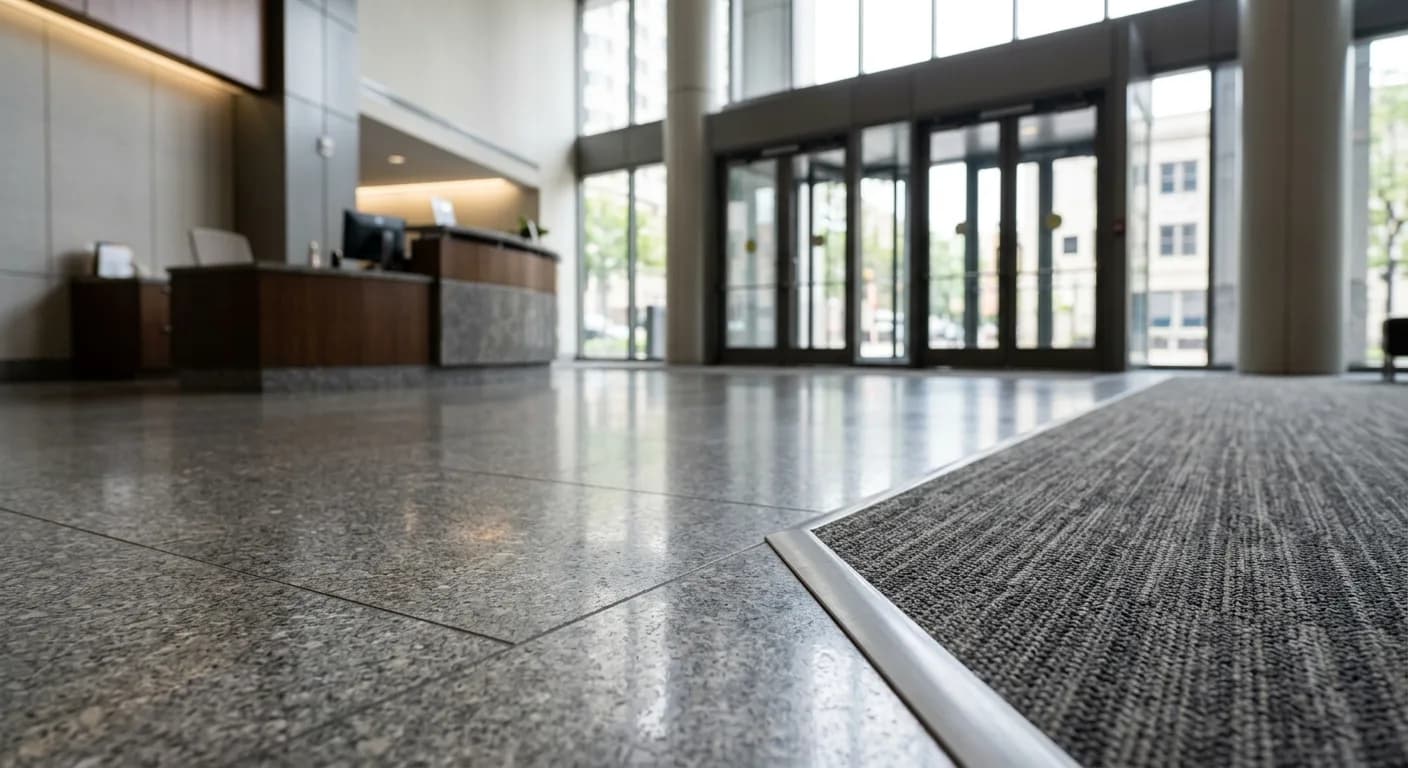
The most damaged spot in most commercial buildings is where two surfaces meet.
Hard floor to carpet at a lobby edge is where grit gets tracked from one onto the other. Kitchen entrance to corridor is where grease crosses a threshold and stops being removable by vacuuming. Matting to carpet is where a mat that has stopped working starts redistributing what it collected.
In a fragmented arrangement those transitions belong to nobody. One contractor cleans up to the edge, another starts at the edge, and neither owns the two feet in between — which is exactly where the soil concentrates.
Sequence matters as much as method. Hard surfaces should be cleaned before adjacent carpet, not after, because that work moves soil and moisture outward. Matting should be cleaned or replaced before a carpet clean, not after, or the first thing walking onto fresh carpet is what the old mat was holding. None of that needs a single contractor — it needs somebody deciding the order, which in a fragmented arrangement nobody does.
What should be consistent across every surface in a building is not the schedule. It is the four things underneath it:
A plan comes out of walking the property, not out of a square-footage figure. The walk takes about an hour and produces four things a quote cannot.
From there the work is grouped by surface type and urgency, and each grouping becomes one-time, seasonal or recurring. The most useful figure to put at the top of the result is what the flooring would cost to replace — it is the honest measure of what the programme protects, and usually the moment a maintenance budget stops looking expensive.
Yes. Larger buildings can be planned in phases so the work fits around daily operations.
Yes. Many clients combine services so carpets, upholstery, and other surfaces are addressed in one visit or planned maintenance schedule.
Power Carpet Cleaning can review the surface condition, use of the space, and drying requirements before recommending a method.
Surfaces, schedules and the transitions where floors actually fail.
Most buildings have four or five floor surfaces and four or five arrangements for looking after them. Coordinating the plan is worth more than optimising any one of them.
Read more →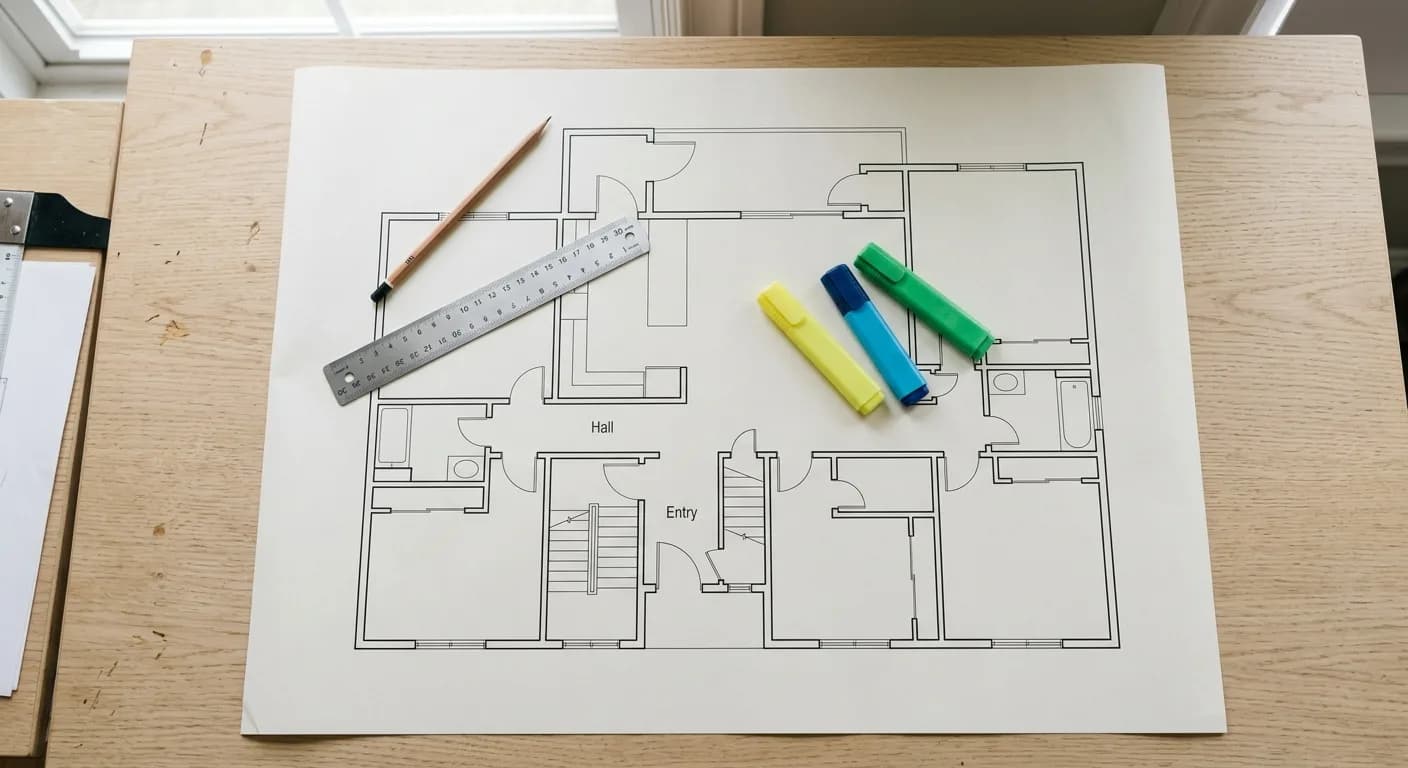
A schedule that says “quarterly” has already made the mistake. The building does not wear at one rate, and the calendar should not pretend it does.
Read more →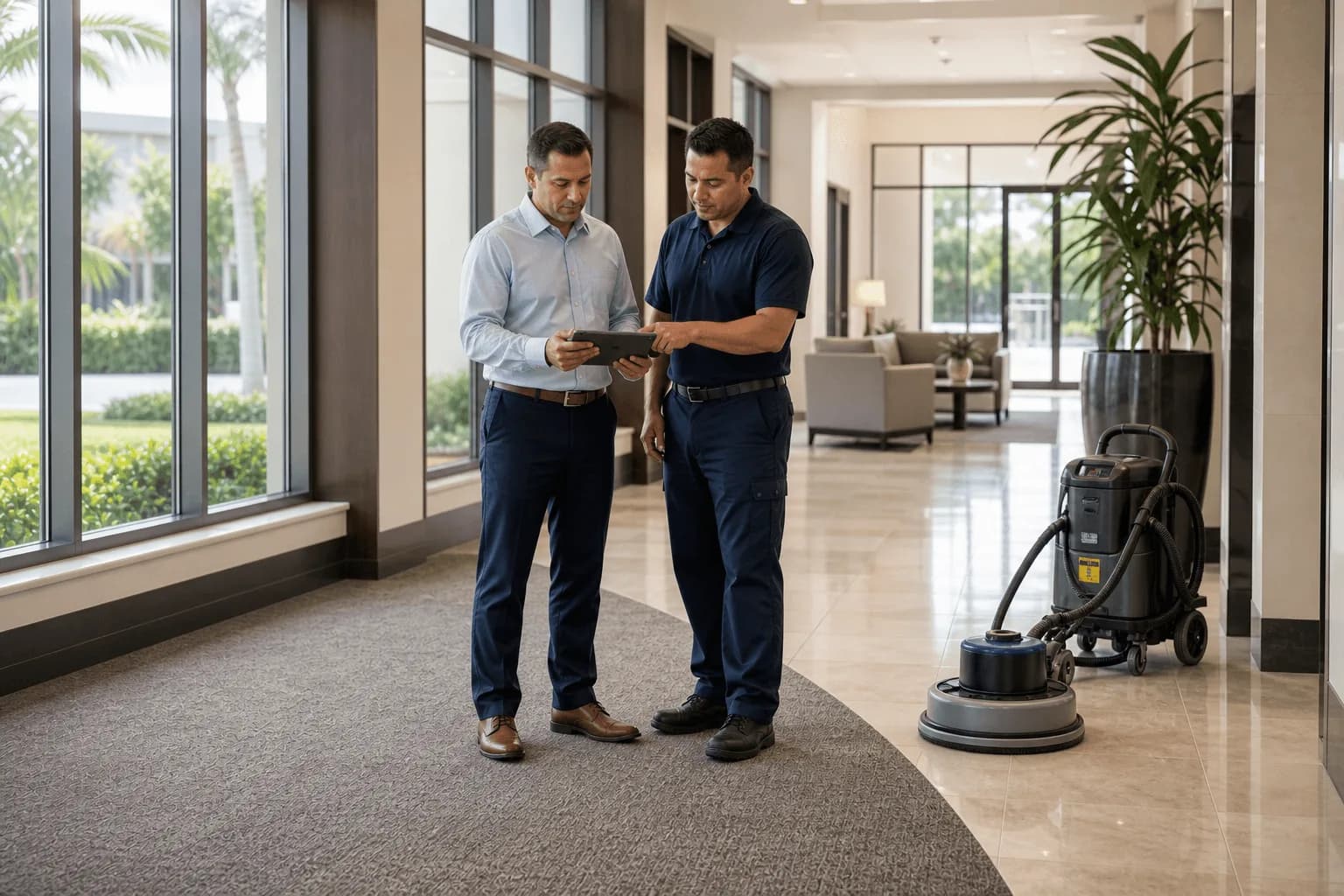
A commercial floor maintenance plan keeps carpet, upholstery, and common areas from reaching the point where every cleaning becomes urgent. For South Florida properties, planning matters because humidity, sand, rain, and heavy traffic can wear down appearance…
Read more →