
Writing a Carpet Maintenance Schedule by Zone
A schedule that says “quarterly” has already made the mistake. The building does not wear at one rate, and the calendar should not pretend it does.
Most commercial carpet schedules contain one number: a frequency. Quarterly, twice a year, monthly for the lobby. It is simple to agree, simple to bill, and it guarantees that part of the building is being over-cleaned while another part is being lost.
A schedule that works is built the other way round — from zones, then frequencies, then a calendar.
Step one: divide the building by usage, not by room
Every area gets a usage rating, and four are enough: Extreme, High, Medium, Low.
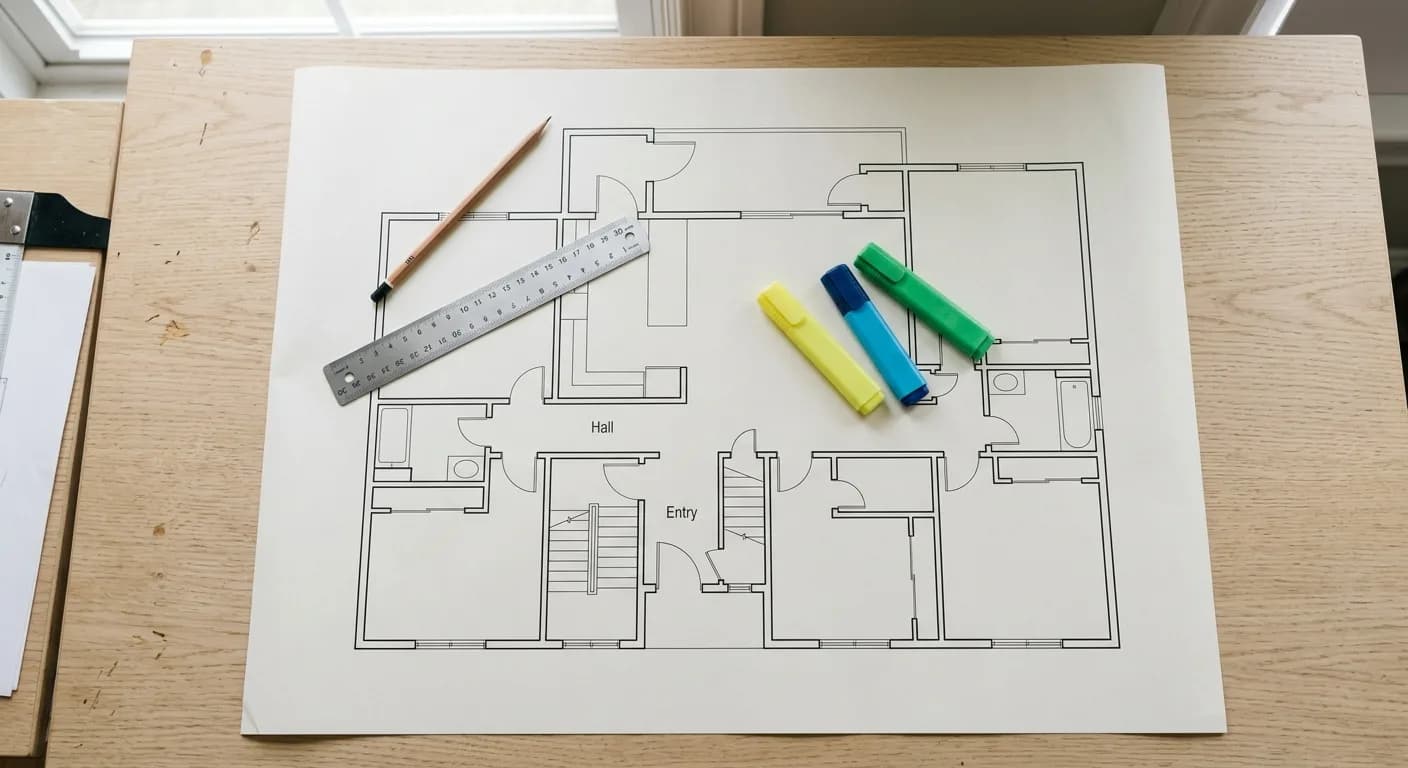
That rating comes from walking the building rather than reading the floor plan. Look at where traffic concentrates, where soil enters, and where the pile has already changed colour or lain down. An entrance run and a fourth-floor private office can be identical in square footage and three ratings apart.
Write the rating against the area, with its square footage. That table is the schedule's foundation, and everything downstream is arithmetic on it.
Step two: attach services, not a single frequency
Against each zone, an annual count for each service that zone needs:
- Restorative extraction — the deep clean, on a long cycle
- Interim low-moisture cleaning — appearance work between them
- Pile lifting — weekly in the traffic lanes, where embedded sand is the problem
- Spot cleaning visits — scheduled, rather than emergency call-outs
- Protector — after restorative work, on the zones that justify it
An extreme-usage entrance might take one restorative clean and eight interim cleans a year. A low-usage office area might take one restorative clean and nothing else. Both are on the same schedule; neither is on the same frequency.
Step three: judge restorative work by soil, not by date
Interim cleaning belongs on a calendar because its job is holding appearance to a standard, and that is a rhythm.
Restorative cleaning does not. It should be triggered by soil level. A schedule that books deep cleans by date either spends money on floors that did not need it or arrives months after the floor did. The practical compromise is to put a restorative clean in the plan as a budgeted allowance at roughly the right interval, and then confirm or defer it on inspection.
Step four: lay it across twelve months
Now the calendar. Twelve months, and within each month the weeks — because "October" is not a schedule for a building that needs to know which corridors are affected on which nights.
Two constraints shape the layout. The building's own calendar comes first: conference season, term dates, the annual closure, the fortnight when the function space is empty. Restorative work goes into those gaps, and it goes in early, because they are the only windows that exist.
Then spread the interim work so the monthly load is even. Not because the carpet cares, but because your crews and your budget do.
Step five: bill it flat
The schedule resolves to an annual cost, and then to an equal monthly payment.
This is the step that decides whether a programme survives its first budget review. Carpet work is seasonal and lumpy — heavy in autumn, quiet in spring. Facility budgets are neither. A line that costs the same every month is a line that gets renewed; one that spikes in October is one that gets questioned every October.
What the schedule is really for
The document's value is not that it tells a contractor what to do. It is that it tells the building what it has decided, so that when a corridor looks tired in March there is a written answer to "why isn't this being cleaned" — either it is due next month, or the zone rating was wrong and should be revised.
Without it, every conversation about carpet starts from scratch and ends in a one-off clean. That is how buildings spend a great deal of money and still replace the carpet early.
We write these programmes and will hand the whole thing to your staff to run — see consultation and training or arrange a site assessment.
Need this handled in your building?
Serving Broward, Miami-Dade and Palm Beach counties.