Odour Is Not a Stain: Biological Contamination
A mark can be removed by washing. A smell cannot, because the source is not on the surface — it is under it, and it is alive.
Cleaning removes marks. It does not reliably remove smells, and the reason is that the two problems are not the same problem.
A mark is material on or in the fibre. An odour is the by-product of something biological still active in the carpet — usually below the surface, often in the backing or the cushion beneath it. Wash the surface and the mark goes. The source stays, keeps working, and the smell comes back within a week.
Which is why "we cleaned it twice and it still smells" is one of the most common calls we take, and why the answer is a different chemistry rather than a third clean.
Enzymes do not clean, they digest
An enzyme pre-spray works on a different principle from a detergent. A detergent lifts and suspends soil so it can be rinsed away. An enzyme breaks the soil down into something that no longer exists as the original substance.
The practical effect on the two categories that cause odour is direct. Grease and oils dissolve in minutes. Protein soils are digested and readied for complete removal by the cleaning that follows.
Protein is the important word. Urine, vomit, food, blood, dairy and the biological material in a gym or a food service area are all protein soils, and they are exactly the ones that resist ordinary cleaning, keep producing odour, and come back after the carpet dries.
Five minutes is not a suggestion
Enzymes need contact time, because they work by chemical reaction rather than by mechanical removal. The product is applied lightly over the soiled areas and allowed to dwell for five minutes before the proper cleaning procedure follows.
That dwell is the part of the job that gets cut when a schedule is tight, and cutting it is the difference between a treatment and a rinse. Extract after ninety seconds and the enzymes have not had time to digest anything — the carpet gets cleaned by the mechanical action alone, the source survives, and the smell returns.
Five minutes on a floor also means the areas needing it should be identified before the machines start, not discovered mid-corridor.
Applied lightly, not flooded
The instruction is to spray lightly over the soiled areas, and the restraint matters. Flooding a contaminated area drives contamination deeper into the backing and the cushion, where the cleaning that follows cannot reach it.
That is the mechanism behind the recurring spot as well as the recurring smell: contamination pushed below the surface travels back up as the carpet dries. Treating an odour with enthusiasm and a lot of water is how a localised problem becomes a large faint one.
Where this belongs in a commercial building
The floors that need enzyme treatment as a routine step rather than an occasional rescue are predictable:
- Food service areas and kitchen entrances, where grease is the dominant soil and tracks outward on every shift
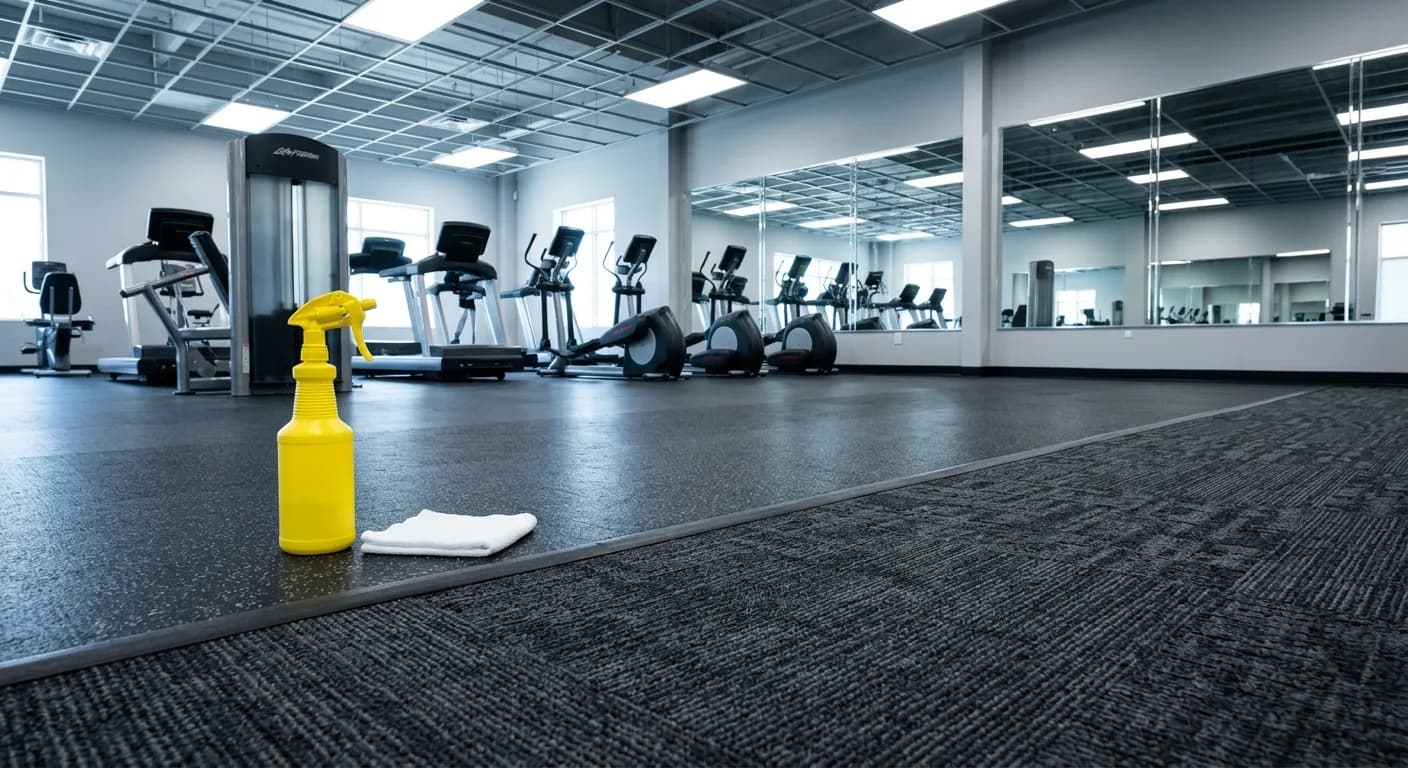
- Fitness areas, where the load is protein and continuous
- Residential buildings that allow pets, particularly lift lobbies and the routes to exterior doors
- Anywhere an incident has been cleaned up but is still detectable, which is the reliable sign that the source was never treated
The honest limit
Enzymes treat what they can reach. Where contamination has soaked through the backing into the cushion, no surface treatment reaches the source, and the answer is replacing the affected cushion rather than cleaning the carpet again.
A contractor who says that out loud is worth more than one who sells a fourth clean. The test is simple: if the smell returns after a correct enzyme treatment with a proper dwell, the source is below what any cleaning method can touch.
More on odour and biological work at pet urine treatment and stain removal, and on sanitising at disinfecting services.
Need this handled in your building?
Serving Broward, Miami-Dade and Palm Beach counties.