Wool in Commercial Spaces: What Damages It
Wool ends up in the parts of a building that matter most — boardrooms, ballrooms, executive floors. It is also the fibre most often damaged by a routine commercial clean.
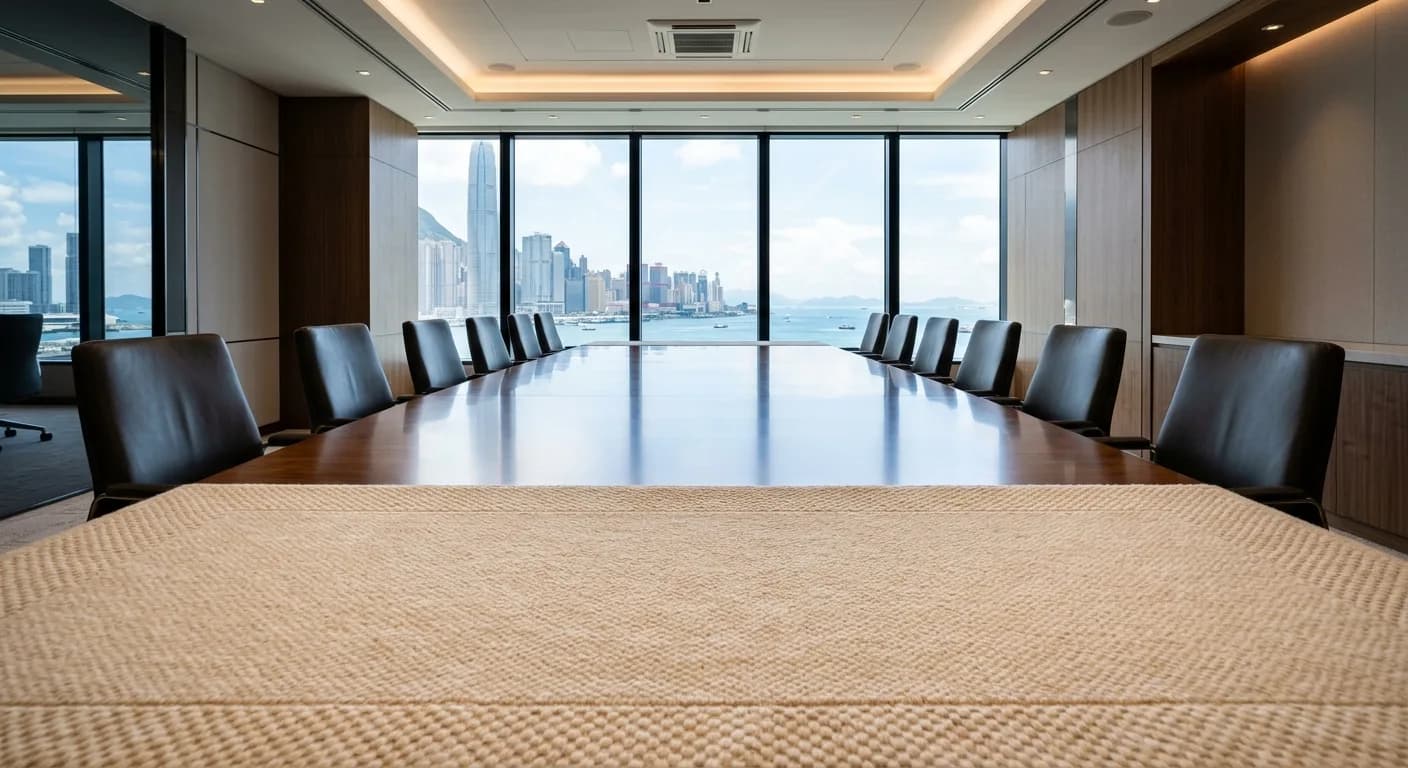
Wool turns up in commercial buildings exactly where the stakes are highest: boardrooms, hotel ballrooms, executive floors, private clubs, the main saloon of a yacht. It is chosen because it looks better and lasts longer than anything synthetic, and it is often the most expensive floor covering in the building.
It is also the fibre most commonly damaged by a routine commercial clean, because the chemistry that is entirely correct on the nylon in the corridor is wrong the moment it crosses the threshold.
Start by assuming it is dirtier than it looks
Vacuum thoroughly to remove as much dry soil as possible. Wool has terrific soil-hiding capability and will most likely be more soiled than it appears — that is a property of the fibre, not a failure of the housekeeping.
Eighty per cent of the soil in any carpet is dry soil, and adding cleaning solution to a carpet still holding it makes mud. On wool that matters twice over, because the soil is hidden and therefore easy to leave in place. If the carpet needs vacuuming on the day, it is pre-vacuumed before anything else happens.
The pre-spray, and the ceiling on it
Use a wool-safe alkaline pre-spray with a pH no higher than 8.5, mixed to the container directions into a pump-up or electric sprayer. Any water temperature works; hot water produces better results.
Apply as a mist in a consistent overlapping pattern, with more solution in the heavily soiled areas — and do not allow the carpet to dry before extraction. A pre-spray that dries in place has stopped being a cleaning agent and started being residue.
That 8.5 ceiling is the single most important number in wool cleaning. Wool is sensitive to alkaline chemicals above 9.5 pH after prolonged exposure, and the recommended cleaning range is 4.5 to 8.5. Ordinary commercial pre-sprays routinely sit above that, which is why "we used the same product we use everywhere" is the usual explanation when a wool floor comes back harsh and faded.
The rinse is where wool is won or lost
Extraction is the rinse cycle — washing away what the pre-conditioning loosened. On wool it uses a wool-safe acidic neutralising rinse at 3.0 to 5.0 pH, in a portable or truck-mount extractor.
A concentrated acidic neutralising agent in the final rinse removes soil and residue better than water alone, and it brings the pH of the carpet back down. The goal is explicit: leave the wool at a neutral pH after cleaning. An alkaline residue left in wool keeps working on the fibre long after the crew has gone.
Groom while it is damp
Groom or set the pile where needed. On wool this is not cosmetic — it is important to groom so you do not leave permanent jet streaks or wand marks. Clean a small section and set the pile while it is still damp and warm. Wool takes a set, and a set taken in the wrong direction stays.
Then dry it fast
Take all steps necessary to dry the carpet quickly: the air conditioning, ceiling fans, and preferably air movers. Speed here is what prevents browning, wicking and — on woven wool — shrinkage, which is the one failure on the list that cannot be reversed.
The same three principles, tighter
Control moisture, pH and dry time and wool is not difficult. The procedure is not more complicated than nylon; the tolerances are narrower. Every step above is the nylon procedure with a number attached to it.
Which is why the question to ask a contractor before they touch a wool floor is simply: what is the pH of your pre-spray, and what is in your rinse tank? If both answers arrive immediately, the floor is in safe hands. If they do not, the floor is about to be the test.
We were trained on natural fibres first — wool, cotton, silk and Oriental rugs — before this company existed. More on that at wool and silk cleaning and about us.
Need this handled in your building?
Serving Broward, Miami-Dade and Palm Beach counties.