Why the Rinse Matters More Than the Pre-Spray
Everyone asks what a contractor sprays on the carpet. Almost nobody asks what is in the rinse tank, and that is the product deciding how the floor behaves for the next two months.
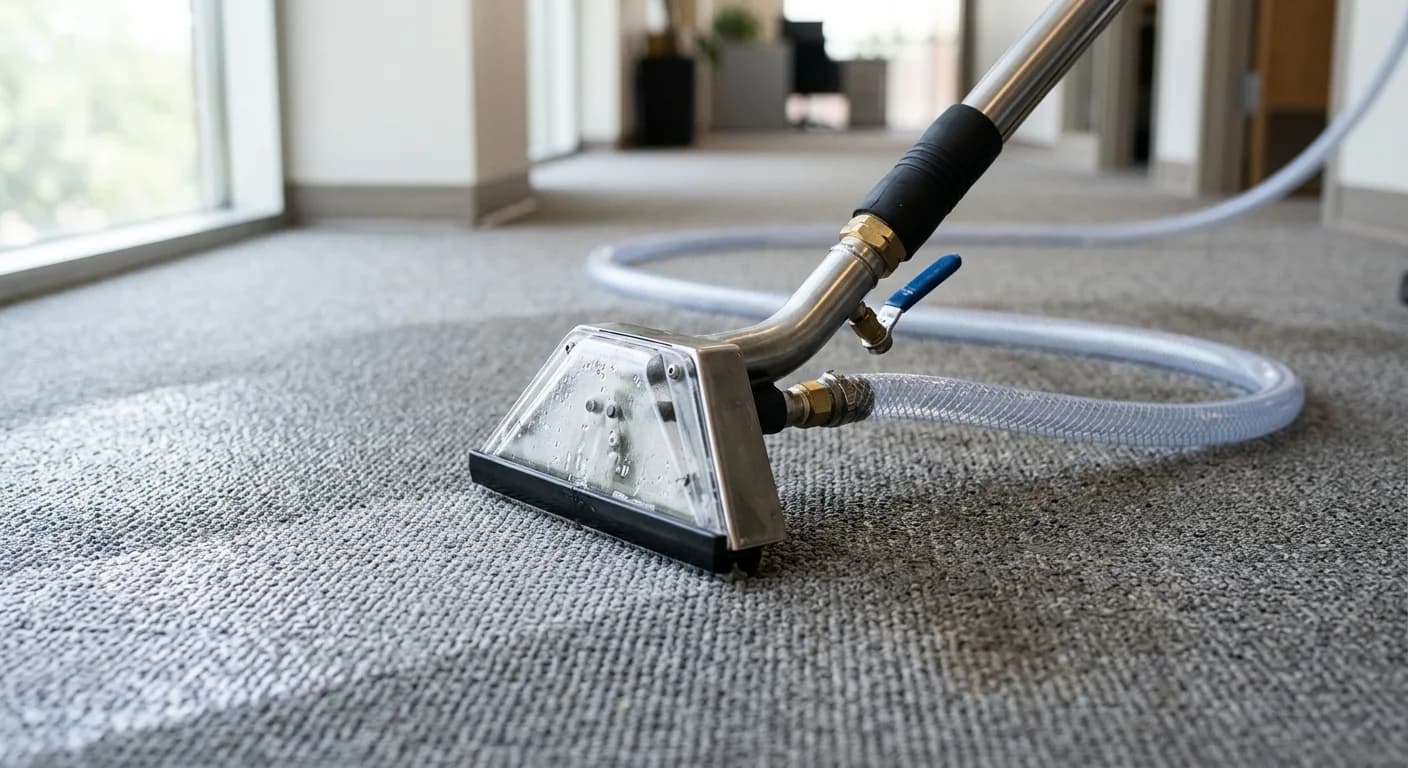
When a building asks a contractor about products, the question is almost always about the pre-spray. It is the visible step, it is what gets sprayed on the carpet, and it feels like the part doing the cleaning.
The rinse is the more consequential product, and it is the one nobody asks about. It determines what is left in the carpet after everyone has gone home, and what is left in the carpet is what decides how the floor behaves for the next two months.
The rinse is not the last step, it is a treatment
Extraction is often described as the rinse cycle — washing away what the pre-conditioner loosened. That is accurate as far as it goes, and it undersells what a proper rinse solution does.
Water alone removes some soil and leaves the carpet wherever the pre-spray left it chemically, which for a normal alkaline pre-spray means alkaline. A concentrated neutralising rinse does several jobs at once:
- It removes residue. Rinse solutions eliminate detergent residues in a way water alone does not.
- It corrects the pH. It neutralises the carpet to a slightly acid pH, which is where carpet should be left.
- It emulsifies what pre-sprays cannot. Powerful surfactants lift tough soils including sand and other particulates.
- It speeds drying, which reduces every moisture-driven problem downstream.
- It prevents browning, and with polymer technology helps prevent wicking and resoiling.
- It leaves the fibre soft, and it makes colours read properly again.
- It returns the carpet to the correct pH for protector, which matters if any is going on afterwards.
That is not a finishing touch. That is most of the outcome.
Residue is why a clean stops holding
Here is the failure the rinse prevents. Detergent left in the pile is sticky. It collects the next fortnight of dry soil faster than the carpet collected the last month of it, which is why a floor can look worse six weeks after cleaning than it did before.
Buildings usually read that as needing to clean more often. It is the opposite: the floor is resoiling quickly because of how it was cleaned, and cleaning it the same way again resets the same cycle.
If a carpet reliably looks dirty a few weeks after every clean, the question to ask is not about frequency. It is what is in the rinse tank.
Wicking and browning have the same cause
Wicking is the spot that reappears a day later, carried back up the fibre as the carpet dries. Browning is a discolouration that appears during drying, most often on natural fibres and jute-backed carpet.
Both are moisture plus residue. Both are prevented by the same two things: not over-wetting, and rinsing properly so there is less residue for the moisture to carry.
An acid rinse can also be used to correct them after the fact — misted on as an after-spray, or applied with a bonnet to remove yellowing and browning that has already appeared.
On wool, the rinse is the job
Wool tightens every tolerance. The rinse is a wool-safe acidic neutralising agent at 3.0 to 5.0 pH, and laboratory testing shows it rinses out soil and residue better than conventional acid rinses or water alone.
It also does something specific to wool: it stabilises the dyes. Wool holds dye to the core of the fibre, and keeping that stable through a clean is what protects the colour. Alongside that it prevents browning and yellowing, brings the carpet to neutral pH — where wool should be left — limits resoiling, and leaves the luxurious feel the carpet was specified for.
Given that wool must be cleaned between 4.5 and 8.5 pH and is damaged above 9.5 with prolonged exposure, leaving alkaline residue in a wool carpet is not an appearance issue. It is ongoing exposure to the thing that damages the fibre.
The question to ask
One question separates contractors: what is in your rinse tank?
"Water" is an answer, and it tells you the carpet will be handed back alkaline, with residue, drying slowly, and likely to resoil. A named neutralising rinse — and on wool, an acidic one with a pH range attached — tells you the person has thought about what the floor does after they leave.
How we run restorative cleaning is at commercial services, and the wool tolerances at wool and silk cleaning.
Need this handled in your building?
Serving Broward, Miami-Dade and Palm Beach counties.