
Hot-Water Extraction or Low Moisture: Choose by Downtime
The choice between extraction and low moisture is not about which is better. It is about how long the space can be out of service — and what the fibre will tolerate.
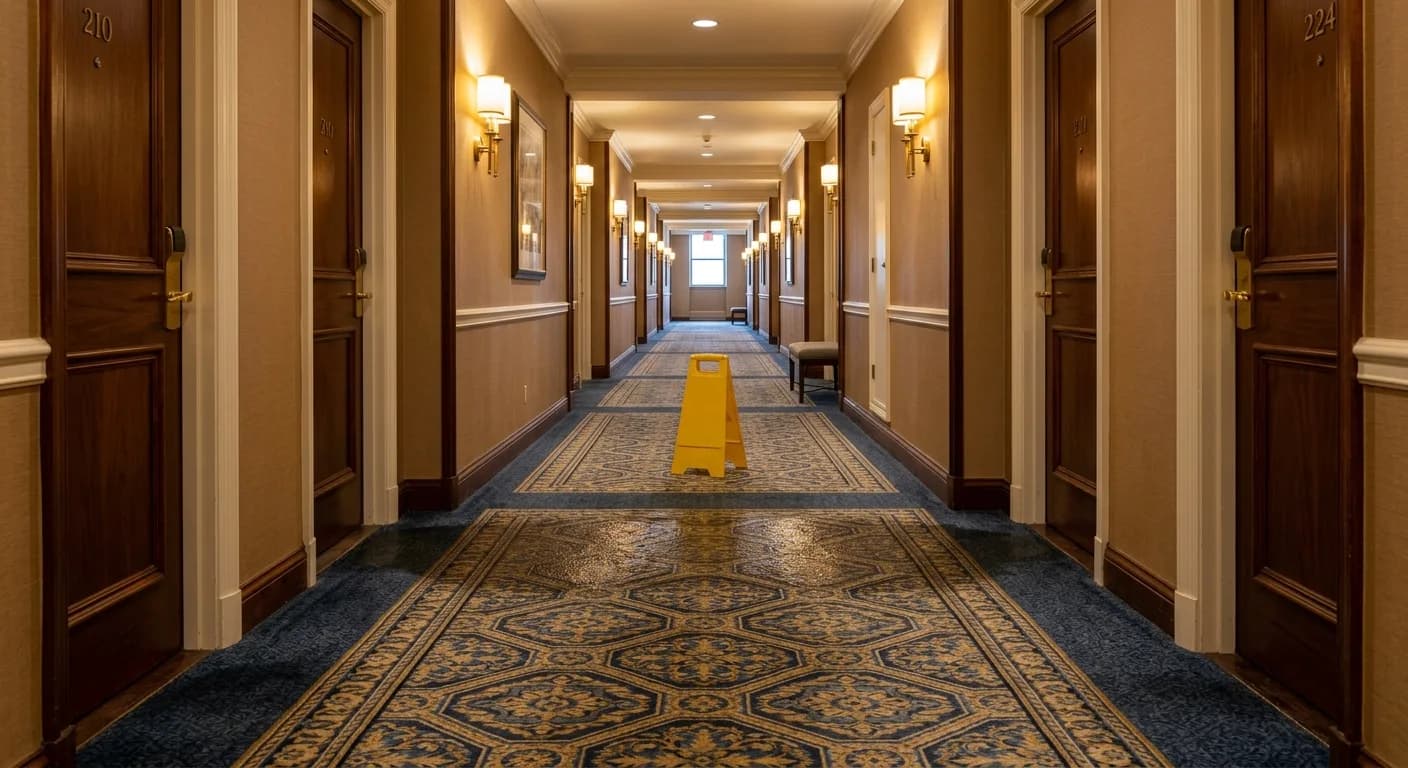
Every commercial carpet enquiry eventually reaches the same question, usually phrased as "which method is better". It is the wrong question. Extraction and low moisture do different jobs, and the thing that decides between them is not quality — it is how long the space can be out of service, and what the fibre will tolerate.
Three principles that govern both
Whatever the method, restorative cleaning comes down to controlling three things: moisture, pH and dry time. Get those right and most fibres are straightforward. Get them wrong and you produce browning, wicking, shrinkage or bleeding — problems that are far more expensive to fix than the clean was to buy.
When extraction is the right answer
Hot-water extraction is restorative work. It reaches soil that low moisture cannot, and it is the method to specify when the carpet has genuinely declined rather than merely dulled. The trade is dry time, and dry time is downtime.
The procedure we run on nylon — the most widely used commercial carpet fibre, chosen for its resistance to matting and wear — goes like this.
- Vacuum thoroughly to remove as much dry soil as possible. Vacuuming alone removes more than 79 per cent of the soil in a carpet, and every gram removed dry is a gram that never becomes mud.
- Treat the spots that will not come out in the clean. Coffee, soda, red food dye, wine, food and protein stains, rust, gum, tar and grease each need their own treatment, and each needs it before the general clean rather than after.
- Pre-condition. Four ounces of pre-spray to a gallon of hot water, or six ounces for exceptionally heavy soil. Spray until the carpet is damp and do not let it dry before extraction. Heavy traffic lanes get agitated with a compatible carpet brush or a cylindrical brush machine.
- Extract. This is the rinse cycle — washing away what the pre-conditioner loosened. Two to four ounces of rinse to five gallons of hot water depending on soil level. The rinse does more than remove soil: it neutralises the carpet to a slightly acid pH, which is what helps prevent browning, wicking and rapid resoiling.
- Groom with a carpet rake while the pile is still damp and warm. This is the step that gets skipped, and skipping it is why some cleans leave visible wand marks and jet streaks. Grooming sets the pile, promotes drying and prepares the carpet for protector.
- Dry it quickly — air movers preferably, or the building's air conditioning and ceiling fans.
When low moisture is the right answer
Low-moisture encapsulation is interim work: it holds appearance between restorative cleans, concentrated where traffic actually is. Carpet is back in light foot traffic in two to four hours, which is the entire reason it exists as a category.
If the space is a corridor in an occupied building, a casino floor that never closes, or a function room turning over the same evening, the choice has already been made for you. There is no version of hot-water extraction that fits a four-hour window on a large floor, and forcing it produces a wet carpet in an occupied building — which is worse than a slightly less deep clean.
Where the fibre decides
Wool changes the calculation. It is a superb face yarn with excellent soil-hiding and soil-release characteristics, and it holds dye to the core of the fibre — which is why hundred-year-old wool rugs still show brilliant colour, and equally why any stain carrying its own dye is so difficult to remove.
Wool is sensitive to alkaline chemicals above 9.5 pH after prolonged exposure. Wool organisations recommend cleaning between 4.5 and 8.5 pH. That is a narrower window than most general-purpose commercial chemistry sits in, and it is not a preference — exceed it and you are damaging the fibre, not cleaning it. Woven wool also shrinks, so moisture control matters more here than anywhere else.
The three principles are the same. The tolerances are tighter.
How to specify it
Run restorative cleaning on a cycle judged by soil level rather than by the calendar. A schedule that books deep cleans by date either spends money on floors that did not need it or arrives months after the floor did. Between those cycles, interim cleaning where the traffic is. And underneath both, the vacuuming that removes 79 per cent of the problem before either method is called.
More on the low-moisture case at low-moisture carpet cleaning, on wool at wool and silk cleaning, and on building the schedule at consultation services.
Need this handled in your building?
Serving Broward, Miami-Dade and Palm Beach counties.