The Steps That Get Dropped When a Price Is Cut
A quote that comes in well under the others is rarely a better rate. It is usually the same work with five steps missing, and each one has a visible consequence.
Three quotes arrive for the same building. Two are close. One is thirty per cent lower.
That gap is almost never a better rate. Labour, product and equipment cost roughly the same for everyone, so a materially lower price is usually the same job with steps removed — and every one of those steps has a consequence that shows up later.
Here are the five that go, in the order they usually go.
1. The pre-vacuum
The first to be cut, because the carpet looks fine afterwards either way.
Dry soil is 80 per cent of the total soil in a carpet. Skip the pre-vacuum and you are applying solution to a carpet still full of it — which, as our own procedures put it, makes mud. The soil that should have been lifted out dry is instead wetted, spread and driven deeper.
What you see later: a clean that looks acceptable and resoils quickly, and traffic lanes that keep getting greyer despite regular cleaning.
2. Dwell time
Pre-sprays and enzyme treatments work by chemical reaction, and reactions need time. A pre-spray wants five to ten minutes on the carpet before extraction. An enzyme pre-spray needs five minutes to digest protein and dissolve grease.
Extract after ninety seconds and the chemistry has not done anything. The floor gets cleaned by mechanical action alone, which is the cheapest possible clean and looks it within a fortnight.
What you see later: greasy areas that never quite come clean, and odours that return because the source was never digested.
3. The neutralising rinse
The most consequential omission and the hardest to detect on the day.
A proper rinse removes detergent residue, neutralises the carpet to a slightly acid pH, speeds drying, and helps prevent browning, wicking and resoiling. Rinsing with water alone leaves the carpet alkaline and leaves residue in the pile — and residue is sticky, so it collects the next fortnight of soil faster than the carpet collected the last month.
On wool it is worse than an appearance issue. Wool must be left at neutral pH and is damaged above 9.5 with prolonged exposure, so alkaline residue is continuing exposure to the thing that damages the fibre.
What you see later: a floor that looks worse six weeks after cleaning than before it, and reappearing spots.
4. Grooming
Thirty seconds per section with a carpet rake, done while the pile is still damp and warm.
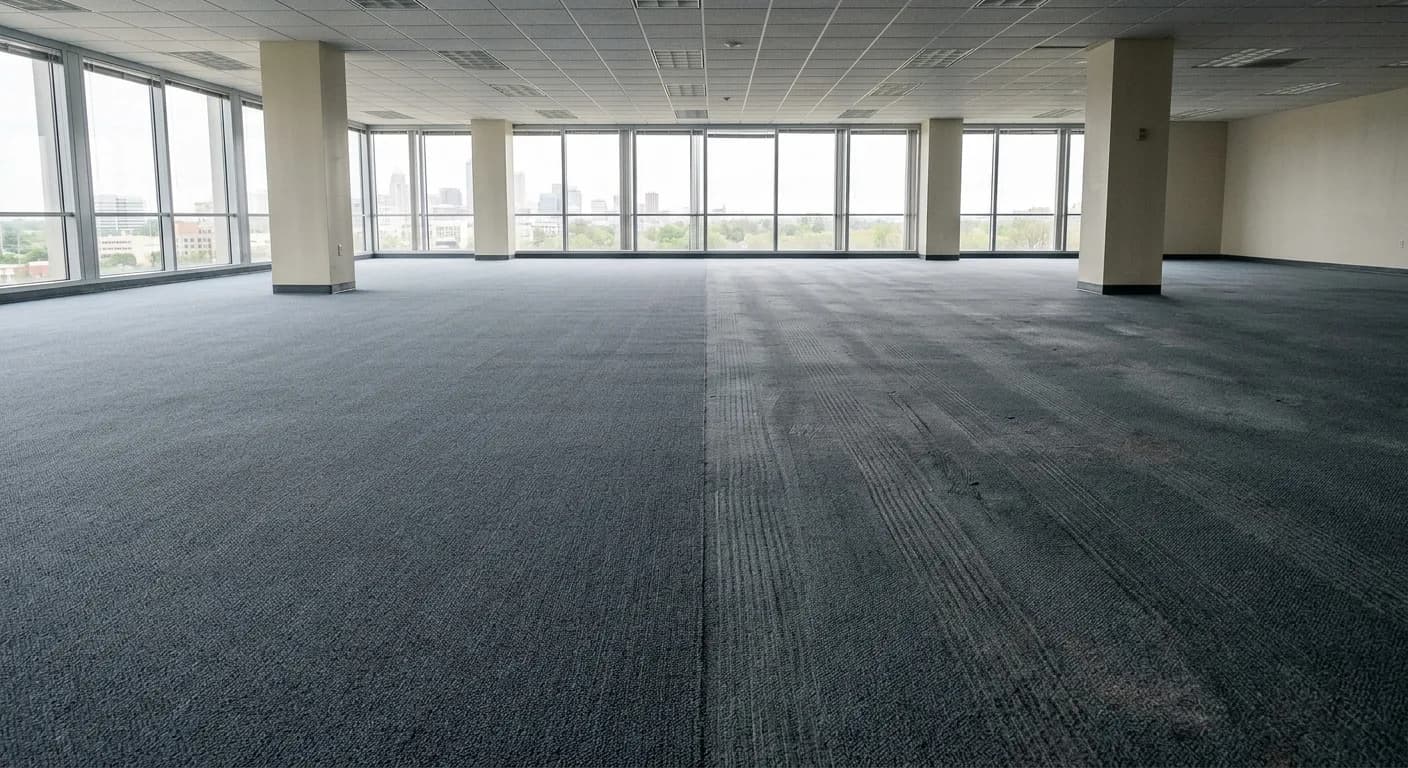
Without it the pile dries in the direction the wand travelled, and because pile catches light directionally those lines read as stripes across the floor. On wool the set can be permanent. Grooming also opens the pile and speeds drying, and prepares the surface for protector.
What you see later: visible wand marks and jet streaks the following morning — the one omission a building notices immediately.
5. Forced drying
Air movers cost money to bring and time to set up, so a rushed job leaves the carpet to dry on its own.
In a subtropical building that is where most post-cleaning problems come from. Slow drying is what allows wicking to carry contamination back to the surface, browning to develop on natural fibres, odour to establish in a damp pile, and woven wool to shrink.
What you see later: spots that reappear, a faint smell, and a space out of service far longer than quoted.
How to close the gap
You cannot audit these from the invoice, but you can specify them. Put the five steps in the tender as included as standard: pre-vacuuming, pre-treatment of spots with stated dwell time, a neutralising rinse, grooming while damp, and forced drying.
Then the quotes are comparable. Bidders who were pricing without them have to add them, and the gap either disappears or is explained.
And if a price still comes back well under the others with all five specified, ask which step they are doing faster. There is usually a straight answer.
What is included in our work is set out at commercial services — or send us your specification.
Need this handled in your building?
Serving Broward, Miami-Dade and Palm Beach counties.