Testing Equipment and Chemistry Before It Ships
Part of this job is running new equipment and new chemistry before it reaches the market, and telling the people who made it what is wrong with it.
Alongside cleaning floors, this company does two things that are less visible and rather more useful to the buildings we work in.
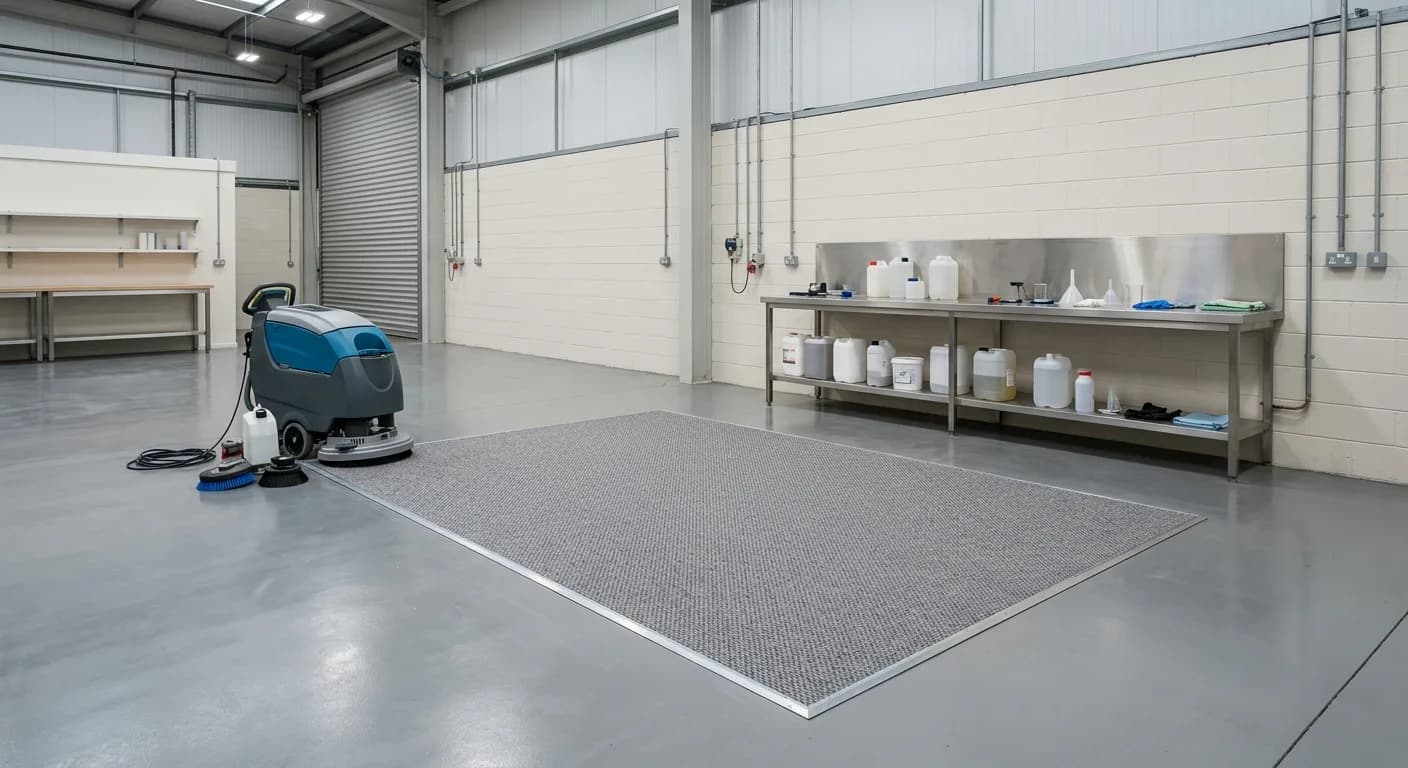
We consult for carpet manufacturers, hotels, cruise ships, convention centres and larger commercial establishments on how to maintain and care for their carpets — building maintenance programmes and advising on equipment, products and technique. And we work with carpet cleaning equipment manufacturers, developing and testing new equipment, chemicals and cleaning methods for the industry.
That second one is worth explaining, because it is unusual and because it changes how the ordinary work gets done.
What testing actually involves
A manufacturer with a new machine or a new formulation needs it run in real conditions before it ships — not in a laboratory, and not on a demonstration floor, but on working commercial carpet in occupied buildings with real soil, real windows and real constraints.
What they want back is not encouragement. It is what failed: where the machine is awkward, what the chemistry does at the edge of its range, what happens on a fibre the specification did not anticipate, and whether it survives contact with a crew working at eleven at night.
Most products change between that feedback and release. Some do not ship at all.
Why it makes a contractor more careful, not less
The intuition might be that testing new things means using unproven things on customers' floors. In practice it produces the opposite instinct.
Spending time at the point where products fail teaches you exactly how narrow some of the safe ranges are. Wool must be cleaned between 4.5 and 8.5 pH and is damaged above 9.5 with prolonged exposure. A red dye reducer works on synthetic carpet and strips the colour out of wool. Woven wool shrinks if over-wetted, permanently. Foreign chemistry in an encapsulation pre-spray fouls the crystallisation the whole method depends on.
Those are not cautions read in a manual. They are the boundaries you learn by watching what happens on the other side of them.
It also means knowing what is coming
New fibre systems, new constructions and new chemistry reach the market on a schedule nobody publishes. A contractor working with manufacturers meets them early, which means the first time a new carpet appears in a customer's building is not the first time anyone has cleaned one.
The same is true in reverse. When a mill sends us to inspect a warranty claim, part of what they are buying is somebody who already knows how that product behaves.
What a building gets out of it
Three things, and none of them appears on an invoice.
Advice that is not attached to a sale. Consulting for manufacturers and facilities means a large part of the work is telling somebody what they should do, including when the answer is that their existing arrangement is fine and needs a specification rather than a contractor.
Method chosen on evidence. Having run the alternatives side by side, the choice between encapsulation, extraction, pad or brush work on a given floor is a judgement rather than whatever is on the van.
Equipment recommendations that mean something. When a building wants to do more of the work itself — which is often the right answer — the recommendation on what to buy comes from having used the options rather than from a catalogue.
The reason it is on this page at all
Carpet cleaning is an unlicensed trade, so the evidence available to a building choosing a contractor is thin: certification, insurance, references. Those are worth checking and they are all obtainable by anyone who applies.
What is harder to obtain is other professionals relying on your judgement — manufacturers testing products with you, mills sending you to adjudicate their warranties, facilities asking you to write their maintenance systems.
Ask a contractor who relies on them for what. It is the question that is hardest to answer well.
More about the company at about us, and about consultation at consultation and training.
Need this handled in your building?
Serving Broward, Miami-Dade and Palm Beach counties.