Ride-On Extraction: Big Floors in One Pass
On a very large floor the limit is not suction, it is walking speed. A ride-on extractor changes the arithmetic — and introduces one mistake that ruins the work.
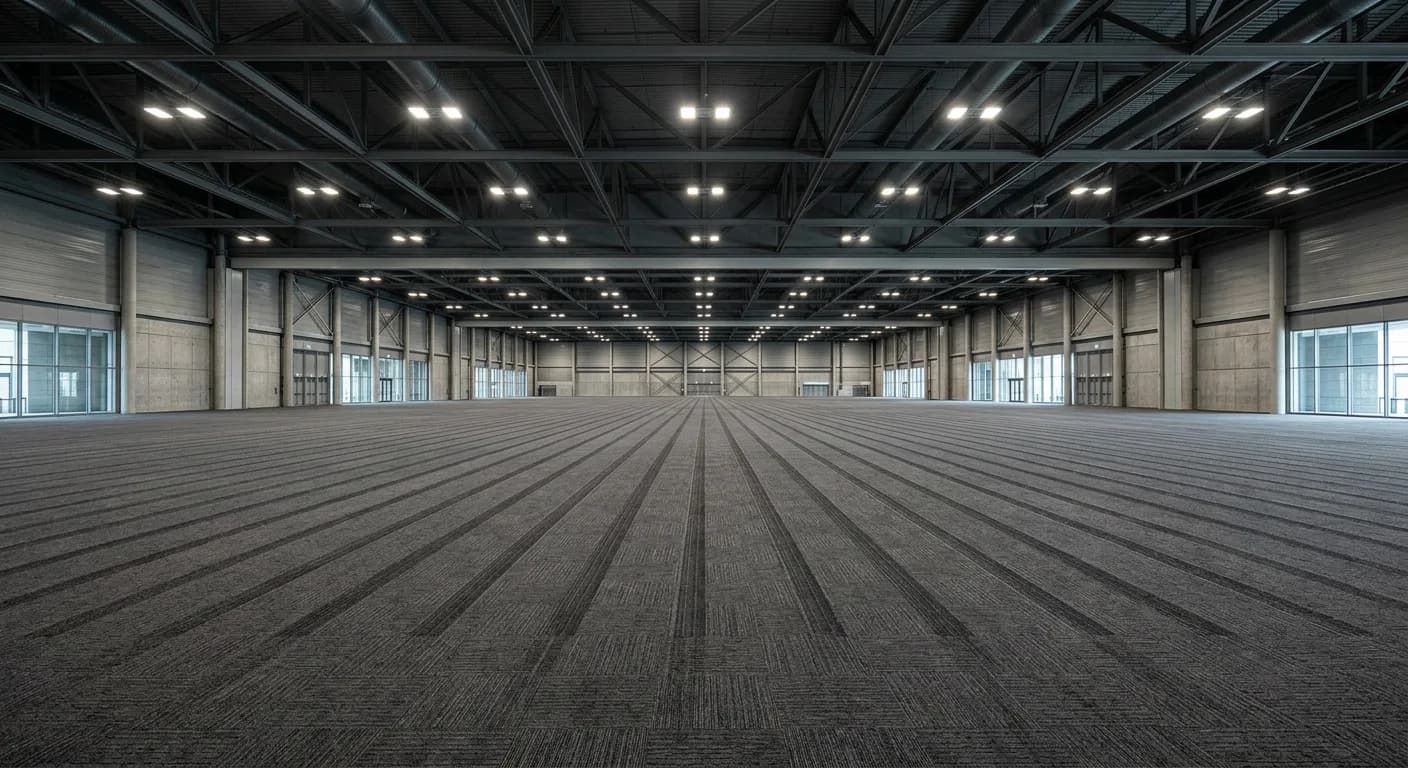
There is a size of floor at which the constraint stops being the machine and becomes the operator. A wand covers a predictable amount of carpet per hour, and on a convention hall, a large open-plan floor plate or a terminal concourse, that rate is what decides whether the job fits the window at all.
A ride-on extractor changes the arithmetic. The technique it requires, though, is different from wand work in a way that matters.
Same preparation, no shortcuts
The preparation is identical to any restorative clean, and skipping it on a large floor is more costly rather than less because there is more of it.
Vacuum thoroughly first. Vacuuming removes more than 79 per cent of the soil in a carpet, and everything left behind becomes mud the moment solution is applied.
Then deal with the spots that will not come out in the clean — coffee, soda, red food dye, wine, food and protein stains, rust, gum, tar and grease. Each needs its own treatment, and each needs it before the machine arrives rather than after. On a large floor these are easy to miss and impossible to go back to once the whole plate has been cleaned around them.
Pre-treat the traffic, not the floor
Where the carpet is heavily soiled — high-traffic areas rather than the whole plate — pre-spray first. Four ounces of pre-spray per gallon of hot water, or six ounces for exceptionally heavy soil. Spray until the carpet is damp, and do not let it dry before extraction.
The discipline on a big floor is to pre-treat only where the soil actually is. Pre-spraying ten thousand square feet uniformly costs product, costs time, and means the areas that needed dwell time got the same as the areas that did not.
Plan the pattern before you sit down
This is the part that separates ride-on work from wand work, and it has to happen before the machine moves.
Plan the scrubbing pattern in advance. For efficient operation the runs should be the longest possible without turning, stopping, or raising and lowering the scrub deck. Overlap the brush path on each pass. And avoid transporting the machine back over previously cleaned areas.
Every one of those is a real cost on a large floor. Each turn is lost time and an uneven overlap. Each stop is a potential over-wet patch where the deck sat. And driving a heavy machine across carpet that is still damp undoes work that has already been paid for — which is the mistake that ruins the job, because on a floor plate this size there is no second window that day.
The rinse tank takes two to four ounces of rinse per five gallons of hot water depending on soil level. That rinse is doing more than removing soil: its surfactants emulsify tough soils including sand and other particulates that pre-sprays cannot remove, and it neutralises the carpet to a slightly acid pH, which is what helps prevent browning, wicking and rapid resoiling.
Then finish it properly
Groom the carpet with a rake so the machine does not leave visible tracks, and set the pile while it is still damp and warm. On a floor this size the grooming is what stops the whole plate reading as a series of stripes under the lighting.
Then dry it fast — air conditioning, ceiling fans, and preferably air movers. Large floors take longer to dry simply because there is more of them, which makes forced drying more important here rather than less.
Where it does not belong
A ride-on is the wrong machine in almost every space that is not large and open. Corridors, lift lobbies, stairs, offices, guest rooms — anywhere with furniture, turns or restricted access — is wand or low-moisture work, and trying to force a ride-on into them produces exactly the turning and stopping the technique is designed to avoid.
Which is the honest summary: the machine is a solution to distance. Where distance is not the problem, it is not the answer.
Which method suits which of your floors is what a site assessment establishes — see commercial services.
Need this handled in your building?
Serving Broward, Miami-Dade and Palm Beach counties.