Mould, Mildew and the Sanitiser in the Rinse
Odour is one of the main reasons commercial carpet gets replaced. In a subtropical building the source is usually microbial, and the place to deal with it is the rinse.
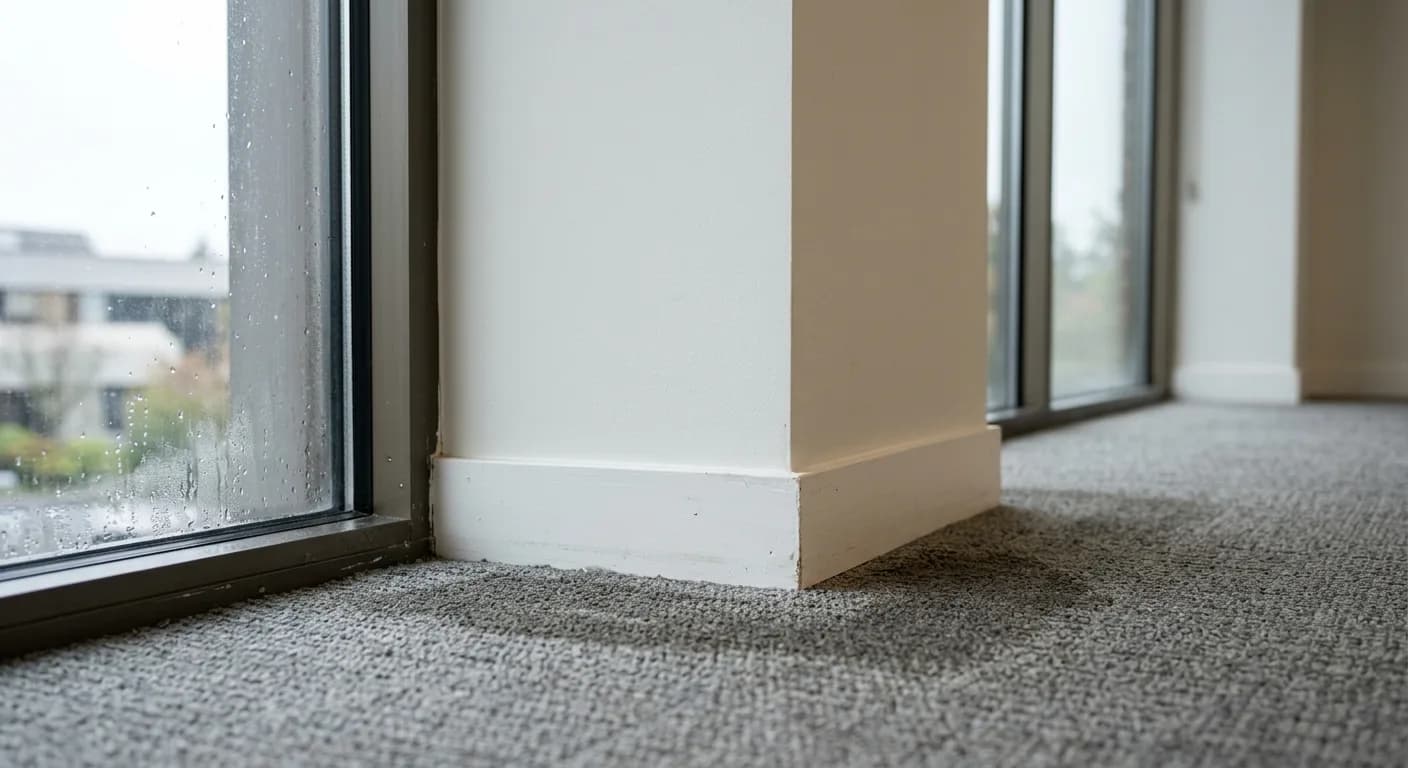
Odours are one of the primary reasons commercial carpet gets replaced — not appearance, not wear. A floor that smells is a floor that gets condemned, often while the fibre is still sound.
In a subtropical building the source is frequently microbial, and that changes where the problem gets solved.
Why humidity makes this a local problem
Mould and mildew need moisture, warmth and something organic to feed on. A South Florida building supplies the first two continuously, and carpet supplies the third: it acts as a filter, trapping soil, gases and animal and human dander out of the air.
That filtering is genuinely useful right up until the filter is full. An excess build-up of soil in carpet can adversely affect the indoor environment, and in a humid one it also feeds whatever is growing in it.
The result is a floor that smells faintly and continuously without any identifiable incident. Nobody spilled anything. It simply developed.
The rinse is where to address it
Restorative extraction is performed when carpets appear heavily soiled, typically one to four times a year. It is also the only step in the whole programme that puts a solution through the full depth of the pile and takes it back out again — which makes it the right place to deal with a microbial load.
The key is to use an extraction product that is both a cleaning agent and a sanitiser. A two-in-one product attacks mould and mildew and sanitises against odour-causing bacteria in the same pass that removes the soil.
Doing it in one step matters practically. A separate sanitising visit is a second mobilisation, a second window and a second wetting of the carpet — and the second wetting is itself a risk in a humid building.
Drying speed is the other half
Sanitising a carpet and then leaving it damp is close to self-defeating. Whatever survives has been given exactly the conditions it needs.
So the same rules apply harder here than anywhere: use the least solution the job allows, force the airflow with air movers, run the building's air conditioning for the dehumidification, and groom the pile while it is damp because grooming opens it and promotes drying.
A carpet that dries in hours behaves. A carpet that stays damp overnight in a Florida building is where the next odour comes from.
Where the source is out of reach
Two honest limits belong in this conversation.
Where contamination has soaked through the backing into the cushion, no surface treatment reaches it. Sanitising the carpet will reduce the smell temporarily and it will return, because the source was never touched. The answer there is replacing the affected cushion, not cleaning the carpet again.
And where there is a genuine building fault — a leak, a failed seal, chronic condensation, standing water under a floor — carpet cleaning is treating a symptom. That needs finding and fixing first, or the same problem regrows on a schedule.
A contractor who says so is worth more than one who sells a fourth clean.
What keeps it from coming back
Most of the defence is not chemical.
Keeping the soil load down, because soil is the food source: vacuuming that keeps pace with traffic, matting at every entrance, and interim cleaning that stops the floor accumulating. Keeping moisture out, which means matting that handles rain as well as grit, and dealing with wet incidents immediately rather than letting them dry in place. And treating biological spills at the source with an enzyme product rather than washing the surface, because a digested source cannot regrow.
Carpet is a filter. The programme is what empties it before it fills.
More at disinfecting and sanitising and commercial services.
Need this handled in your building?
Serving Broward, Miami-Dade and Palm Beach counties.