Green Seal and CRI Seal of Approval: What They Certify
“Green” on a carpet cleaning proposal usually means nothing at all. Two labels do mean something specific, and they certify two completely different things.
Almost every commercial cleaning proposal now says something about green chemistry. Most of those claims are adjectives. Two of them are not, and it is worth knowing which is which — particularly if your building is pursuing a certification of its own, where an unsubstantiated claim in a contractor's proposal is worth nothing to you.
Two labels, two different questions
The Carpet & Rug Institute Seal of Approval answers: does this product clean, and does it damage the carpet? It is a performance and safety programme specific to carpet. Products are tested for soil removal and for what they leave behind — residue, and the resoiling that residue causes.
Green Seal answers a different question: what is in this, and what does it do to people and the environment? It is a health and environmental standard, and it is not carpet-specific.
A product can hold one and not the other, which is precisely why "we use green products" tells you almost nothing on its own. The useful question is which certification, for which product, and for what claim.
Certified as a standalone product
There is a detail in the certification wording that matters more than it looks. Our pre-spray earned the Carpet & Rug Institute's Seal of Approval as a standalone product.
That phrase exists because some products are only certified as part of a system — pre-spray plus a specific rinse plus a specific machine. Standalone certification means the product was tested and passed on its own terms, which is a stronger claim and a more portable one.
Certification does not survive misuse
Here is what the labels cannot do: guarantee the result. A certified pre-spray is certified at its intended dilution and dwell.
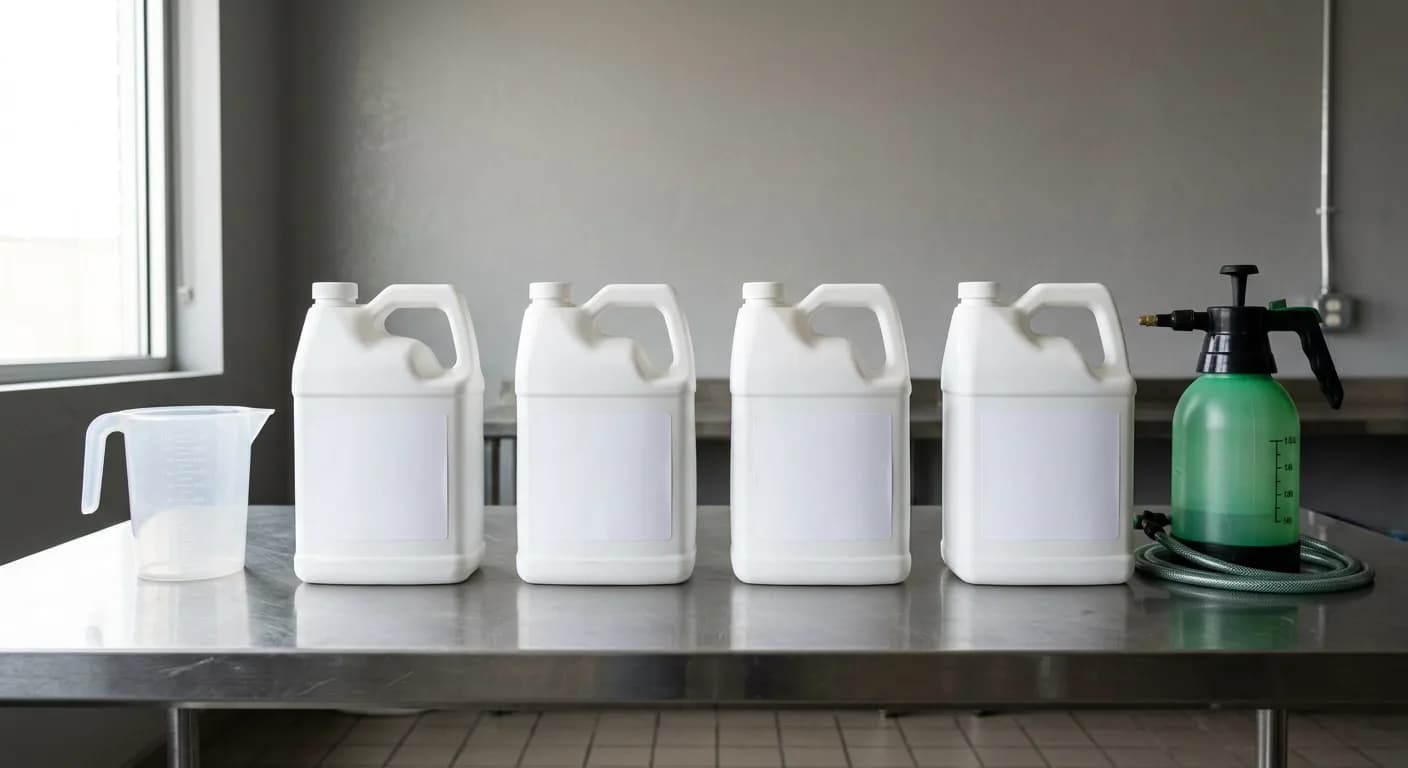
Ours dilutes 1 part to 8, reaching a final dilution of 1:32 in application, and it wants 5 to 10 minutes of dwell time on the carpet before extraction with hot water. Every one of those numbers is load-bearing. Under-dilute and you leave residue the certification was awarded for avoiding. Extract after 90 seconds because the schedule is tight and you have not given the chemistry time to do the work, so the floor gets cleaned by mechanical action alone and the certified product becomes an expensive way to wet the carpet.
Which is the honest summary of what a certification buys: it removes one variable. It does not remove the operator.
Why residue is the common thread
Both programmes care about what stays in the carpet, for different reasons — CRI because residue attracts soil and shortens the interval before the floor looks dirty again, Green Seal because what is left in an occupied building is what people are exposed to.
They converge on the same practical point. The measure of a good commercial clean is not how it looks on the day; it is how quickly it stops looking that way. A carpet that resoils in three weeks was not cleaned, it was rinsed with something sticky.
What to ask for
Three questions, and any competent contractor can answer them on the spot:
- Which products carry which certification — the name of the certification and the name of the product, not "green"
- What dilution and dwell time the process actually uses on site
- What is in the rinse, because that is what determines what is left behind
If a building is chasing its own environmental certification, ask for the documentation rather than the claim. The spec sheets exist; a contractor who uses these products has them.
What we use and why is part of every site assessment — see commercial services or get in touch.
Need this handled in your building?
Serving Broward, Miami-Dade and Palm Beach counties.