Encapsulation Chemistry: Residue Is the Enemy
Every carpet cleaner leaves something behind. Encapsulation is the method that makes the residue the point — provided the residue is the right kind, and provided somebody vacuums.
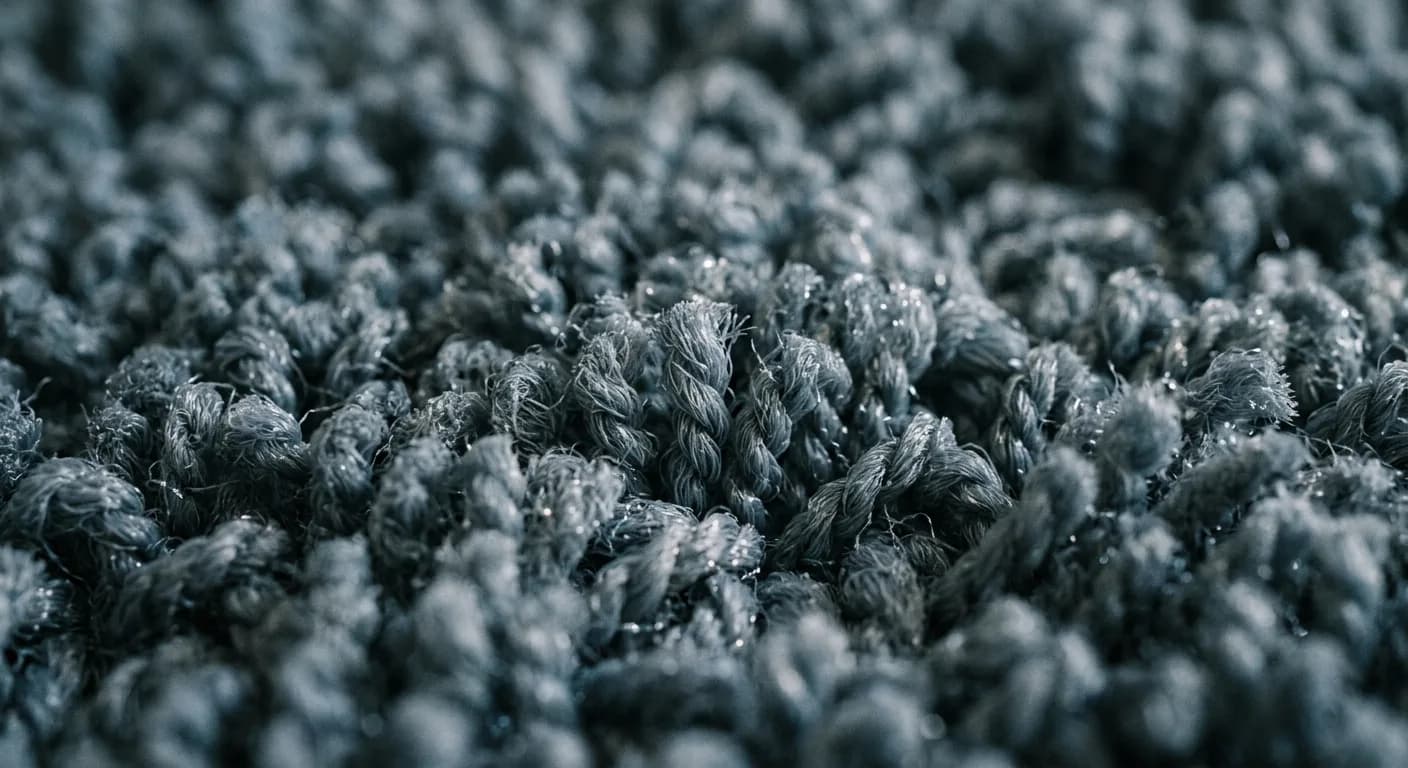
Every carpet cleaning method leaves something in the carpet. Detergent cleaning leaves surfactant, which is sticky and collects the next fortnight of dry soil faster than the carpet collected the last month of it — the reason a floor can look worse six weeks after a clean than it did before.
Encapsulation takes that problem and inverts it. Instead of trying to leave nothing behind, it deliberately leaves a residue engineered to be removable, and makes that residue the mechanism.
What the polymer does
An encapsulation cleaner combines surfactants with encapsulating polymers. The surfactants suspend and release soil from the carpet during cleaning, in the ordinary way. The polymer is the part that changes the outcome: it attaches to both the carpet soils and the fibres, and then it dries.
What it dries into is the whole trick. The polymer sets to a very hard film. Hard means brittle, and brittle means it fractures — so when the carpet is vacuumed, the dry polymer breaks away from the fibre and takes the soil attached to it out of the carpet.
The soil is not dissolved and it is not extracted. It is wrapped in something rigid and then snapped off.
Why brittleness is the specification
This is where cheap encapsulants fail. A polymer that dries soft stays flexible on the fibre, and a flexible film does not fracture — it bends around the vacuum's beater bar and stays put, holding the soil it captured and collecting more.
So "hard" is not a durability claim. It is the functional requirement. A soft encapsulant is a sticky residue with better marketing.
The word that matters in a Florida building
The polymer we use is non-hygroscopic — it does not attract and hold moisture from the air.
In most of the country that is a footnote. In South Florida it is the specification. A hygroscopic residue in a building running at high humidity never fully dries; it stays slightly tacky, and a tacky residue is exactly the resoiling problem encapsulation exists to avoid. The method would work in the laboratory and fail in a lobby in August.
The same property produces the other benefit: carpets cleaned with it most often dry in less than an hour. Faster drying is not just less downtime — it is less time for moisture to carry contamination back to the surface, which is what wicking is.
The step that is not ours
All of which depends on something happening after we leave. The soil comes out when the carpet is vacuumed, so the building's own vacuuming routine is not housekeeping running in parallel with the cleaning programme — it is the last step of it.
Vacuum with high-efficiency collection and filtration, so crystallised cleaning agents and suspended soils are removed rather than redistributed into the air of an occupied building. And keep vacuuming: routine passes continue lifting crystallised soil for days afterwards, which is why a properly encapsulated floor keeps improving instead of declining from the moment it was cleaned.
A building that stops vacuuming after an encapsulation clean has paid for the chemistry and skipped the mechanism.
What to ask
Two questions separate encapsulation done properly from encapsulation used as a word:
- Does the polymer dry hard and non-hygroscopic? Both properties are on the spec sheet of any serious product, and neither is guessable from the result on the day.
- What is the vacuuming schedule afterwards? If the contractor has no answer, they have not explained the method to you — because the method is not finished when they drive away.
The full procedure is set out in our encapsulation walk-through, and where it fits at low-moisture carpet cleaning.
Need this handled in your building?
Serving Broward, Miami-Dade and Palm Beach counties.