Cruise and Port Facilities: Cleaning to a Sailing Schedule
A ship in port is a building with a departure time. The work has to be finished, dry and off the vessel before it sails, and nothing about that schedule is negotiable.
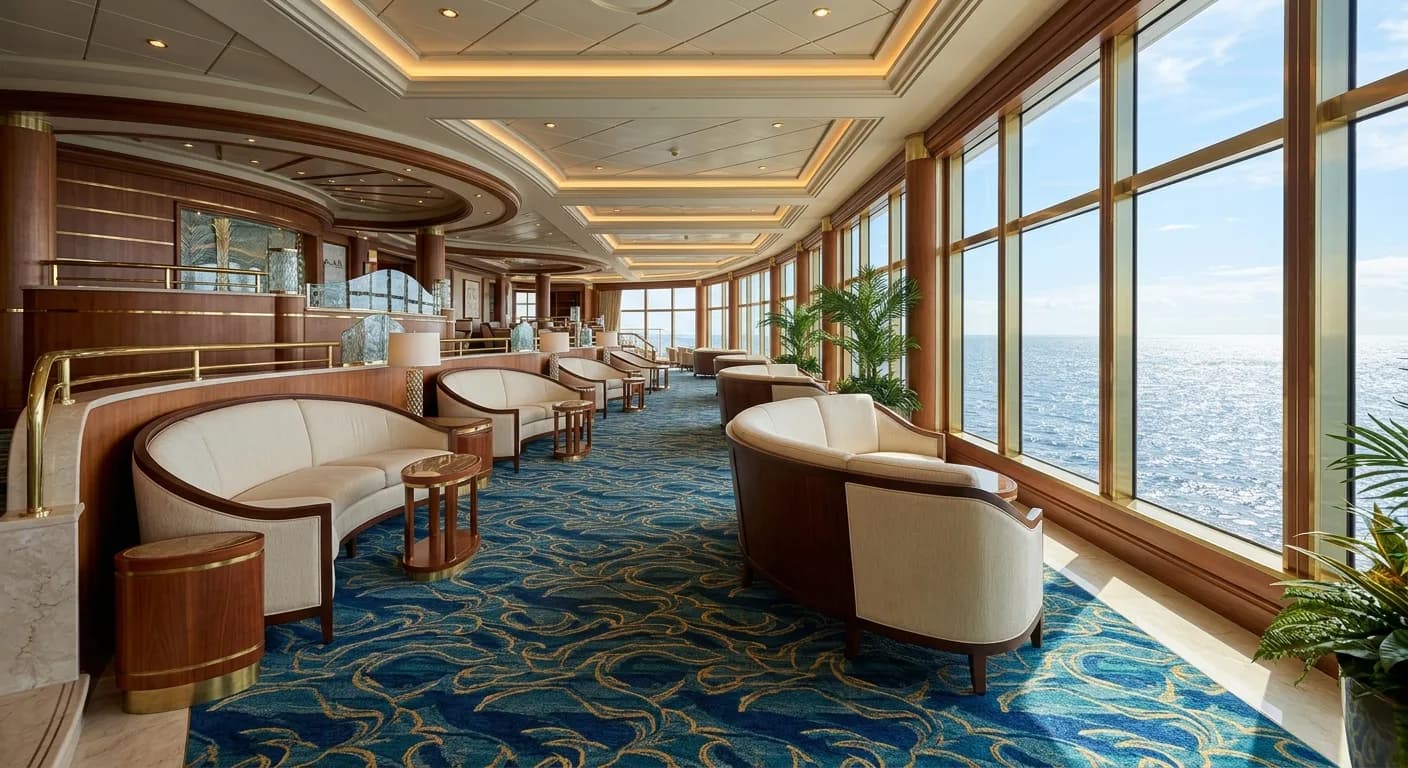
Cruise ships are one of the property types this company has worked with since it started, and they are the most schedule-driven carpet work there is. A vessel in port has a turnaround measured in hours, during which it is being provisioned, cleaned, repaired and re-boarded simultaneously.
Everything has to be finished, dry and off the ship before it sails. There is no coming back tomorrow.
The window is the specification
On a turnaround day the available time is fixed and short, and carpet work is one of many trades competing for it. That settles the method before anyone looks at the floor.
Low-moisture encapsulation dries to the touch in 20 to 60 minutes depending on conditions and returns carpet to light foot traffic in two to four hours. That is what fits. Restorative extraction belongs in dry dock or in a scheduled lay-up, planned months ahead.
Sectioning is not a nicety either — it is the only way to work a public room while a hundred other people are moving through it. Plan the runs, keep a dry route out, and never carry equipment back across carpet that has just been treated.
Humidity is the constant enemy
A vessel does not dry like a building ashore. The atmosphere is humid, salt-laden and largely enclosed, and interior spaces have limited natural air movement.
Carpet that would dry in four hours in an office can stay damp far longer aboard, and damp is where every serious problem begins — browning, wicking, odour, and on woven wool shrinkage, which cannot be undone.
So moisture control is not a preference here, it is the whole discipline: the least water the job allows, forced drying running throughout, and a hand-over that is genuinely dry rather than merely finished.
Salt compounds it. Salt carried in on feet is hygroscopic — it draws moisture out of the air and holds it in the fibre, so a salt-laden carpet stays slightly damp and soils faster between cleans. Matting at every point of embarkation earns more here than almost anywhere.
Wool interiors, and the chemistry they need
Public rooms, lounges and suites aboard are frequently wool, chosen for appearance and longevity, and wool sets tight limits. Cleaning between 4.5 and 8.5 pH, with an alkaline pre-spray no higher than 8.5 and an acidic neutralising rinse at 3.0 to 5.0 that leaves the carpet neutral.
That rinse does several jobs at once aboard a vessel: it stabilises the dyes, works to prevent browning and yellowing, limits resoiling, and leaves the fibre soft. In an environment where browning is the most likely failure, it is the single most important product on the trolley.
Wool also hides soil extremely well, so shipboard carpet is routinely more soiled than it appears — and vacuuming, not chemistry, remains 80 per cent of the job.
Everything has to be right first time
The constraint that shapes shipboard work more than any other is that you cannot go back for something. Whatever is on the trolley when the gangway closes is what the job has.
That is why a shipboard kit is assembled deliberately rather than gathered: a wool-safe pre-spray, a wool-safe acidic rinse, a wool protector, a neutral spotter, and a full spotting kit covering the categories that will not come out in a general clean — coffee, soda, red food dye, wine, food and protein stains, rust, gum, tar and grease.
Red dye needs specific mention. A red reducer works on synthetic carpet and fabrics — not wool, where it will strip the carpet's own colour rather than the spill's. On a vessel with wool public rooms, that distinction has to be understood by whoever is holding the bottle.
What the crew maintains between ports
Most of a ship's carpet life happens when no contractor is aboard, which makes the onboard routine the real programme: vacuuming that keeps pace with continuous occupancy, matting maintained rather than merely present, and immediate spot response by crew who have been trained on the four steps — blot first, work outside-in, never scrub, apply weight to lift the solution back out.
On wool, a neutral pH wool-safe spotter only, and a mark that resists two correct attempts gets logged for the next port rather than attacked with something harsher.
More at cruise ships and vessels and yachts and private vessels.
Need this handled in your building?
Serving Broward, Miami-Dade and Palm Beach counties.