Commercial Carpet Cleaning Field Notes: Office Floor Care Planning in South Florida
Quick answer: A good commercial carpet cleaning plan starts with traffic patterns, soil level, building hours, drying requirements, and the type of carpet installed. For South Florida offices and commercial facilities, Power Carpet Cleaning uses those details to recommend a…
Quick answer: A good commercial carpet cleaning plan starts with traffic patterns, soil level, building hours, drying requirements, and the type of carpet installed. For South Florida offices and commercial facilities, Power Carpet Cleaning uses those details to recommend a cleaning method, schedule work around business operations, and connect the job to a practical maintenance plan.
Why This Commercial Carpet Cleaning Scenario Matters
Office carpet usually fails in the same places first: entrances, hallways, conference rooms, break rooms, elevator landings, and paths around desks. Those areas collect more sand, moisture, spills, and tracked-in soil than low-traffic rooms. When the cleaning plan treats every square foot the same, high-traffic zones can look worn again too quickly.
This field-notes article explains how a commercial carpet cleaning visit can be planned for an office, professional building, showroom, or managed property in South Florida. It is written as a practical service example, not a named client claim.
Typical Starting Point
- The property needs cleaner, better-looking carpet without disrupting staff or customers.
- Traffic lanes are darker than the rest of the carpet.
- Some spots keep returning after light cleaning.
- The building may need after-hours, weekend, or phased service.
- Drying time matters because the space needs to reopen quickly.
How Power Carpet Cleaning Evaluates the Job
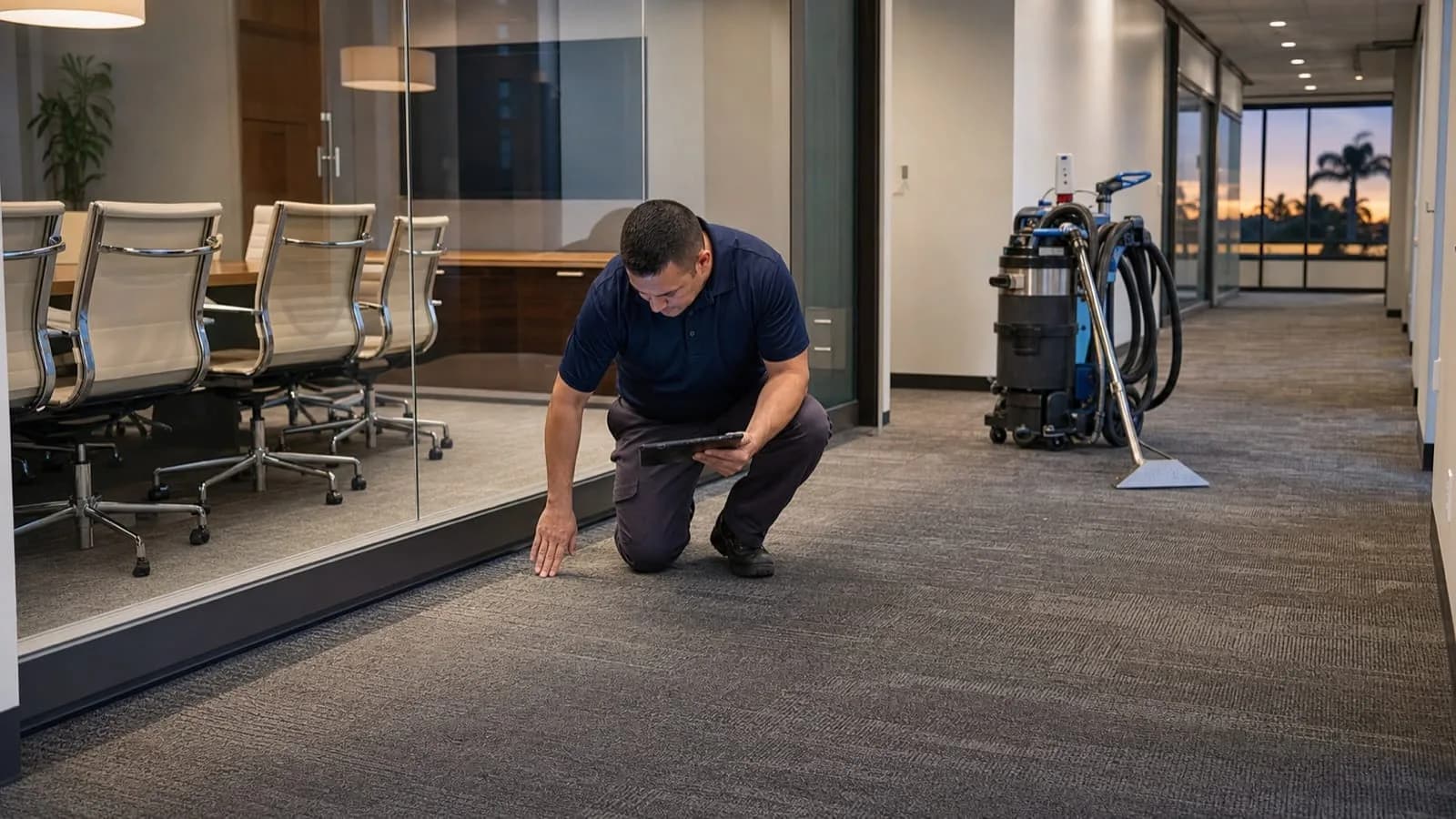
The first step is to separate appearance issues from maintenance issues. A walkthrough looks at entry points, fiber type, stain patterns, furniture layout, ventilation, and the way people move through the space. That helps decide whether the job needs restorative cleaning, low-moisture cleaning, periodic maintenance, spot treatment, or a combination.
Recommended Service Path
- Pre-inspection: Identify traffic lanes, spots, transition areas, and areas with heavier soil.
- Soil management: Vacuum and prepare the carpet so embedded dry soil is removed before cleaning chemistry is applied.
- Targeted spot treatment: Treat drink spills, tracked-in soil, and recurring stains before the full cleaning pass.
- Cleaning method selection: Match the method to the building schedule, carpet condition, and drying needs.
- Post-cleaning review: Check traffic lanes, edges, and problem areas so the property manager knows what was addressed.
- Maintenance plan: Recommend a realistic schedule for the busiest areas instead of waiting until the whole carpet looks worn.
Internal Service Links for This Type of Project
- Commercial carpet cleaning in South Florida
- Commercial floor maintenance plans
- Low-moisture carpet cleaning for faster turnaround
- Carpet cleaning in Broward County
- Commercial carpet cleaning in Miami-Dade
- Commercial carpet cleaning in Palm Beach County
What Property Managers Should Ask Before Scheduling
Before scheduling commercial carpet cleaning, ask how the work will be phased, what areas need the most attention, how drying time will be managed, and whether recurring maintenance is a better fit than one large cleaning each year. These questions help protect appearance, budget, and business continuity.
FAQ
How often should an office carpet be cleaned?
Office carpet cleaning frequency depends on traffic, soil level, building use, and appearance standards. Many commercial spaces need high-traffic areas cleaned more often than private offices or low-use rooms.
Is low-moisture carpet cleaning good for offices?
Low-moisture cleaning can be a strong option for offices when fast drying and low downtime matter. The best method depends on the carpet condition, soil load, and whether the goal is maintenance or restorative cleaning.
Can commercial carpet cleaning be scheduled after hours?
Yes. Commercial carpet cleaning is often scheduled after hours, on weekends, or in phases so the business can keep operating.
Need this handled in your building?
Serving Broward, Miami-Dade and Palm Beach counties.